
Edema and the Safe Use of Diuretics in CKD
Understanding Edema in Chronic Kidney Disease
Edema is one of the most visible and distressing complications of chronic kidney disease (CKD). As kidney function declines, the ability to excrete sodium and water is impaired. The result is a gradual expansion of extracellular volume, which often presents as swelling in the legs, ankles, or around the eyes.
What makes edema in CKD particularly complex is the difference between intravascular and interstitial compartments. Patients may have swollen legs and still appear volume-depleted inside their blood vessels, because fluid is “third-spaced” into tissues. This paradox means that managing edema is not as simple as removing fluid. It requires careful balancing of sodium intake, water retention, and vascular filling pressures.

Diuretics and Their Role in CKD
Diuretics remain one of the most important tools to control fluid overload in CKD. Diuretics in CKD include several classes, but loop diuretics are the cornerstone. Furosemide, bumetanide, and torsemide act on the loop of Henle to block sodium reabsorption, producing strong natriuresis and diuresis. These agents are especially effective even when kidney function is moderately to severely reduced.
Thiazide and thiazide-like diuretics, such as chlorthalidone and metolazone, are less effective alone in advanced CKD but often work synergistically with loop diuretics. The so-called “sequential nephron blockade” approach—combining loop and thiazide diuretics—can break through resistance when edema becomes refractory.
The reason diuretics in CKD are prescribed is not cosmetic. Persistent volume overload contributes to hypertension, accelerates left ventricular hypertrophy, worsens proteinuria, and increases the risk of hospitalization. When used appropriately, diuretics directly improve patient comfort, quality of life, and outcomes.
Debunking the Myth: Are Diuretics Nephrotoxic?
A common misconception among patients—and sometimes even providers—is that diuretics in CKD “damage the kidneys.” This confusion arises because serum creatinine levels may rise after aggressive diuresis, giving the appearance of kidney injury. In reality, diuretics do not cause structural nephrotoxicity in the way true nephrotoxins do.
True nephrotoxic agents such as NSAIDs, aminoglycosides, amphotericin B, or iodinated contrast cause direct tubular or vascular injury. By contrast, diuretics in CKD change renal hemodynamics by reducing intravascular volume. When fluid is pulled too aggressively, renal perfusion pressure can drop, leading to a reversible rise in creatinine known as prerenal azotemia. If hypovolemia is sustained and severe, renal ischemia can progress to acute tubular necrosis (ATN). This sequence is not “toxicity” from the drug itself but the consequence of overuse and under-monitoring.
Understanding this distinction is critical. When a patient’s creatinine rises during use of diuretics in CKD, the clinician must decide whether this reflects a desired hemodynamic shift that alleviates congestion or whether it signals excessive volume removal and compromised renal perfusion. The key is not to label the drug as toxic, but to tailor its use to the individual’s hemodynamic status.
Medication Review: When Diuretics Can Be Risky
Although diuretics are not intrinsically nephrotoxic, their effects on fluid and electrolyte balance can create secondary risks if monitoring is neglected. A thorough medication review is therefore essential in every patient with CKD who is prescribed a diuretic.
High doses of loop diuretics can cause ototoxicity, particularly when given intravenously and rapidly. This risk is uncommon but worth noting, especially in patients also taking other ototoxic drugs like aminoglycosides. More frequently, electrolyte disturbances emerge. Diuretics in CKD can cause hypokalemia, hyponatremia, and hypomagnesemia, all of which can provoke arrhythmias or muscle weakness. The combination of loop and thiazide diuretics raises these risks further, and patients on sequential nephron blockade should have electrolytes checked frequently.
The biggest pitfall is intravascular volume depletion. When patients are aggressively diuresed without careful titration, hypovolemia can reduce renal perfusion pressure. This may show up as a rise in creatinine or urea nitrogen – prerenal azotemia. If uncorrected, the state can advance to ischemic acute tubular necrosis. Importantly, this acute kidney injury reflects overuse rather than inherent drug toxicity. Fortunately, this can be a reversible type of injury if promptly recognized and treated.
Patients with CKD are often on complex regimens that include ACE inhibitors, ARBs, SGLT2 inhibitors, and other agents that alter intrarenal hemodynamics. A medication review ensures that diuretics are dosed safely in the context of these therapies, and that contributing agents like NSAIDs are avoided. The key is balance: enough diuresis to relieve congestion, but not so much that renal perfusion is compromised.
Dietary Considerations: Sodium and Fluid Restriction
Managing edema and fluid overload in chronic kidney disease requires more than just medication. Excess sodium intake promotes water retention, raising blood pressure and directly reducing the effectiveness of diuretics in CKD. A sodium-restricted diet enhances diuretic efficacy by lowering the counteractive pull of salt on fluid balance, which allows patients to achieve symptom relief with lower, safer doses of medication. Fluid restriction may also be necessary, especially in advanced CKD or heart failure, to prevent dilutional hyponatremia and worsening swelling. When both salt and fluid intake are carefully limited under medical guidance, patients often experience better control of edema, fewer hospital admissions, and more stable daily function.
Click to learn more with our “What Do You Know About Sodium” Rack card.
Clinical Scenarios Where Diuretics Are Essential
Despite these risks, there are many scenarios where withholding diuretics in CKD would be far more dangerous than using them.
Advanced CKD with refractory edema: As kidney function declines, sodium retention accelerates. Patients often develop swelling in the legs, ascites, or pulmonary congestion. Fluid overload in this setting not only diminishes quality of life but also worsens hypertension and accelerates cardiovascular disease. Diuretics in CKD are indispensable for breaking this cycle.
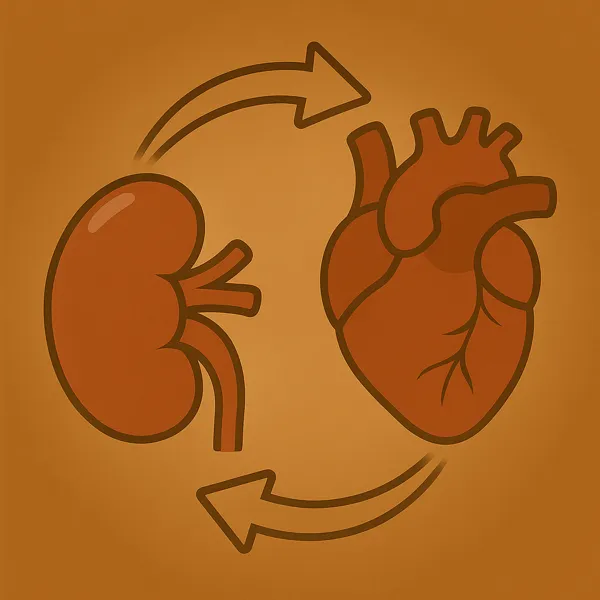
Heart failure and cardiorenal syndrome: Many CKD patients also live with heart failure. In these patients, the heart and kidneys are locked in a pathophysiologic loop. Heart failure raises venous pressures, leading to renal congestion and reduced kidney perfusion. This in turn triggers sodium and water retention, which worsens volume overload and further stresses the heart. This vicious cycle is known as cardiorenal syndrome. Diuretics, by relieving venous congestion, are often the only immediate tool to break the loop. While creatinine may rise transiently during aggressive diuresis, the overall benefit—reduced filling pressures, improved cardiac output, and relief of pulmonary edema—usually outweighs the short-term hemodynamic cost.
Nephrotic syndrome: In patients with heavy proteinuria and hypoalbuminemia, edema can be severe and resistant to standard doses of loop diuretics. In such cases, combination therapy or the use of albumin infusions with loop diuretics may be considered. Even here, the goal is not cosmetic but life-preserving, preventing skin breakdown, infection risk, and respiratory compromise.
Across all these scenarios, diuretics are not optional add-ons but central to stabilizing the patient. They are not toxic to the kidneys when used correctly; rather, they are life-saving in the management of fluid overload. The art lies in adjusting dose, timing, and drug combinations, with close attention to electrolytes and kidney function.
Outpatient Innovations: Rapid Diuresis Clinics and Home-Based Options
Managing fluid overload used to mean a binary choice: adjust oral medications at home or admit the patient to the hospital for intravenous diuresis. In recent years, however, new models of care have emerged to bridge this gap and keep patients out of the hospital.
Rapid diuresis clinics are a growing resource in nephrology and cardiology practices. These outpatient units allow patients with decompensated edema to receive intravenous loop diuretics under close nursing supervision. Typical candidates include those with heart failure, advanced CKD, or nephrotic syndrome who are short of breath, unable to lie flat, or gaining several pounds of fluid weight despite escalating oral therapy. Instead of reflexively sending these patients to the emergency department, a rapid diuresis clinic provides IV access, same-day laboratory checks, and careful volume removal in a monitored setting. By preventing admissions, this approach not only reduces cost but also lowers exposure to hospital-acquired infections and deconditioning. Importantly, these clinics reinforce the message that diuretics in CKD are a therapeutic lifeline when delivered safely and in the right environment.

Beyond the clinic, new self-applied subcutaneous delivery systems have recently been developed for home use. These patch-like infusion devices administer furosemide continuously into the subcutaneous tissue, bypassing the gut and avoiding the need for intravenous lines. Patients or caregivers can apply the device at home when rescue therapy is needed, typically during sudden weight gain or worsening edema. Early studies suggest this method can achieve effective natriuresis and diuresis comparable to IV dosing, while sparing patients a trip to the hospital. For selected CKD patients with recurrent volume overload, subcutaneous furosemide may offer an empowering new option, provided they have clear parameters for when to use it and ongoing follow-up with their care team.
These innovations do not replace traditional strategies such as oral titration or inpatient care when necessary. Instead, they expand the toolkit. By incorporating rapid diuresis clinics and self-applied rescue systems, nephrologists and patients gain more flexible, patient-centered pathways for controlling congestion. In this evolving landscape, diuretics in CKD can be delivered through novel systems but always guided by the same principle: safe, tailored fluid removal that prevents harm while improving quality of life.
Takeaway: Safe, Targeted Use of Diuretics in CKD
The bottom line is that diuretics are not nephrotoxic. They do not injure kidney tissue in the way true nephrotoxins like NSAIDs, aminoglycosides, or iodinated contrast do. What they can do, if overused, is tip a patient into prerenal azotemia or even acute tubular necrosis through volume depletion. That distinction matters.
Used thoughtfully, diuretics in CKD are among the most valuable medications for controlling edema, improving comfort, preventing hospitalizations, and interrupting the vicious cycle of cardiorenal syndrome. The key is careful dosing, ongoing laboratory monitoring, and coordination with the healthcare team. With these safeguards in place, diuretics remain a cornerstone of safe, effective fluid management in chronic kidney disease.
Works Cited
- KDIGO 2024 Clinical Practice Guideline for the Evaluation and Management of Chronic Kidney Disease. Kidney Int. 2024.
- Ellison DH, Felker GM. Diuretic treatment in heart failure. N Engl J Med. 2017;377:1964–75.
- Brater DC. Diuretic therapy. N Engl J Med. 1998;339:387–95.
- Costanzo MR, et al. Extracellular volume overload and diuretic resistance in heart failure. Am J Med. 2005;118(7):S37–S45.
- NKF Kidney Disease Outcomes Quality Initiative (KDOQI) clinical practice guidelines.