Powerful New Model for True CKD Remission: A Paradigm Shift in Chronic Kidney Disease Management.
Chronic kidney disease (CKD) care is undergoing a fundamental transformation. For decades, clinicians framed CKD as a condition that could be slowed at best but rarely improved in any meaningful way. A recent publication in Kidney International by Tangri and colleagues challenges that long-held assumption and introduces a reproducible, evidence-based model for achieving CKD remission as a measurable state where albuminuria improves, kidney function stabilizes, and the trajectory of decline is no longer considered inevitable.
This shift represents more than a theoretical refinement. It reframes what success looks like for patients, restructures how clinicians think about therapy, and aligns directly with the growing body of guideline-directed recommendations from KDIGO, KDOQI, and narrative reviews focused on disease-modifying therapies. Together, these sources build a unified case: CKD remission is possible, achievable, and quantifiable, and the tools to pursue it already exist in routine practice.
Understanding the CKD Remission Framework
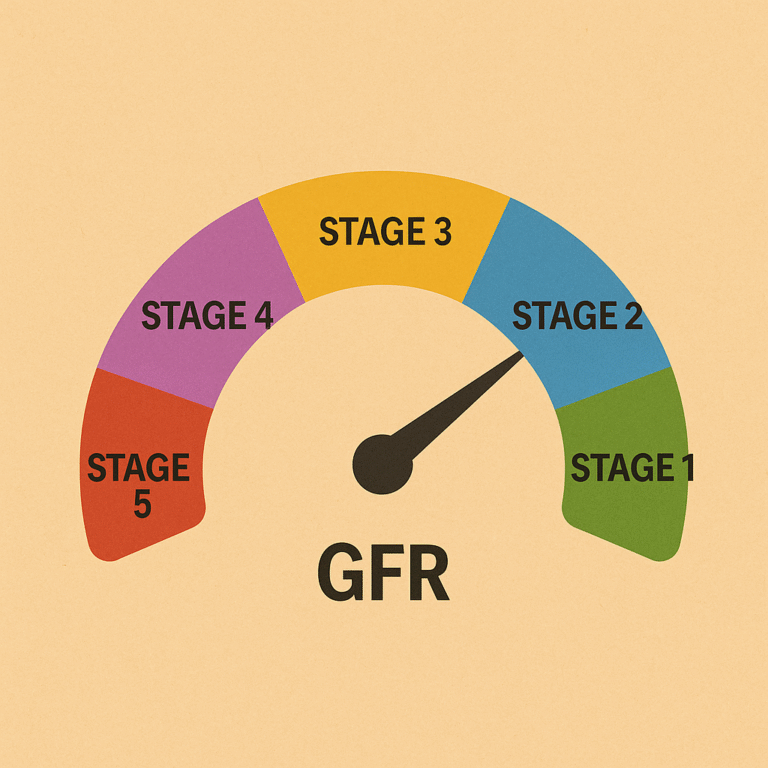
The concept of CKD remission emphasizes a departure from older progression-only models. Traditional care typically measured success by slowing the rate of GFR decline. In contrast, the remission framework focuses on positive movement including reductions in albuminuria, stabilization of creatinine, and improvement in risk classification. This mirrors frameworks used in diabetes and heart failure, where therapeutic targets shifted over time from “delay deterioration” to “achieve meaningful recovery” or “stability over time.”
Tangri et al. outline remission as a composite concept that includes:
- Sustained improvement in albuminuria categories
- Stabilization or very slow decline in eGFR
- Absence of acute kidney injury events
- Optimization of guideline-based therapies
- Demonstrable improvement in long-term risk profiles
This approach emphasizes proactive engagement with therapies known to influence glomerular hemodynamics, tubular workload, metabolic stress, and renal inflammation. It also builds on large trials showing that the modern interventions of RAAS blockade, SGLT2 inhibitors, and mineralocorticoid receptor antagonists can change the functional biology of kidney disease rather than merely delaying damage.
What the Kidney International Article Demonstrates
In the Kidney International report, Tangri and colleagues consolidate evidence that patients receiving comprehensive, layered therapy achieve remission markers far more frequently than previously recognized. They highlight data from recent trials showing significant reductions in albuminuria and improvements in clinical risk scores, especially with combined SGLT2 inhibitor and MRAs, and they describe remission as a “new standard of success” rather than an aspirational outcome.
The key findings include:
- A growing proportion of patients exhibit meaningful improvement in albuminuria with optimized therapy.
- SGLT2 inhibitors provide consistent reductions in CKD progression events across nearly all stages and risk categories.
- Finerenone and related agents in the nonsteroidal MRA class add incremental protection beyond RAAS inhibition.
- Early initiation of therapy correlates strongly with remission outcomes.
- Remission aligns with reduced hospitalization rates, improved cardiovascular outcomes, and lower mortality.
These findings dovetail with real-world registries demonstrating that remission markers are associated with better long-term kidney survival than traditional stabilization goals.
Why CKD Remission Is Clinically Important
Reframing kidney care around CKD remission affects patients, clinicians, and health systems in several practical ways. It sets a higher bar which is evidence-based for what patients should expect from treatment. It reinforces the need for early diagnosis, home monitoring, and repeat albuminuria measurements. And it gives clinicians a structured target when adjusting medication regimens over months and years.
Historically, education around CKD emphasized avoiding irreversible decline. Remission provides a different message: improvement is possible, and patients have an active role in helping therapies work effectively.
For patients, remission often means:
- Fewer acute illness episodes
- More stable blood pressure
- Lower cardiovascular risk
- Greater energy and functional capacity
- Delayed or avoided dialysis

For clinicians, remission reshapes the conversation around long-term planning and risk communication, replacing therapeutic pessimism with realistic optimism.
Where KDIGO 2024 Fits into the Remission Model
The KDIGO 2024 CKD Guideline forms a foundational component of this modern framework. It emphasizes:
- Tight blood pressure control (target <120 systolic when tolerated)
- Routine measurement of albuminuria
- Early deployment of disease-modifying therapies
- Avoidance of nephrotoxins
- Stage-specific medication stewardship
- Aggressive cardiovascular risk reduction
Later parts of the guideline aligns directly with the remission concept by defining kidney-protective strategies that reduce proteinuria and slow eGFR decline. The language of “therapies that modify disease course” resonates clearly with Tangri’s remission framework.
In essence: KDIGO provides the scaffolding; the remission model provides the target.
NKF and KDOQI: The U.S. Interpretation of Remission-Oriented CKD Care
The KDOQI U.S. Commentary reinforces the importance of standardized measurement, early treatment uptake, and adherence to proven therapies. It highlights gaps in American implementation, acknowledging that many eligible patients never receive SGLT2 inhibitors or MRAs despite strong evidence of benefit.
The Commentary also addresses real-world barriers (cost, polypharmacy, and concerns about side effects) and recommends system-level interventions that help clinicians sustain disease-modifying regimens long enough for remission markers to emerge.
This perspective lends additional credibility and anchors the remission model within U.S. practice standards.
How Patients Can Participate in CKD Remission
Achieving CKD remission is not solely dependent on medication. Patients have critical influence over remission trajectories through daily habits and routine monitoring. Effective patient participation includes:
- Maintaining consistent blood pressure treatment
- Following sodium-aware meal planning
- Staying within prescribed hydration ranges
- Avoiding NSAIDs
- Monitoring home weight and symptoms
- Bringing a structured CKD tracker to every appointment

These steps reinforce medication effects and give clinicians reliable data to adjust therapy gradually rather than reactively.
Learn how to be proactive in your CKD care by reading our CKD FAQ article with detailed links to more specific information.
The Future of CKD Remission: Combining Therapies and Rethinking Outcomes
The remission framework positions kidney care closer to cardiology and endocrinology, where combination therapy is now standard. The future likely includes:
- Broader use of SGLT2 inhibitors earlier in CKD
- Increased adoption of finerenone
- Integration of GLP-1 receptor agonists for metabolic risk
- Risk-stratification using machine learning tools
- Therapies targeting inflammation and fibrosis
- Preventive strategies for high-risk stage 2 and 3 patients
This is a shift from “manage decline” to “optimize recovery,” and it resonates strongly with population health programs, value-based care initiatives, and proactive practice models.
Conclusion
The concept of CKD remission marks a major turning point in the management of chronic kidney disease. Supported by high-quality evidence from Tangri et al., reinforced by KDIGO 2024, and contextualized by the NKF/KDOQI U.S. commentary, remission reframes CKD from an unavoidably progressive disease into a treatable, modifiable condition with measurable targets.
Patients benefit from a clearer sense of purpose. Clinicians gain a more precise therapeutic framework. And practice models that emphasize early therapy, structured follow-up, and evidence-based care will align naturally with this new paradigm.
The message is simple and powerful: CKD remission is possible and increasingly expected when modern therapies and patient engagement work together.
Works Cited
- Tangri N, Neuen BL, Cherney DZ, Tuttle KR, Perkovic V. From Progression to Remission: A New Paradigm for Success in Chronic Kidney Disease. Kidney International. 2025.
- Kidney Disease: Improving Global Outcomes (KDIGO) 2024 CKD Guideline. Kidney International.
- Wanner C, et al. Guideline-Recommended Disease-Modifying Therapies for Chronic Kidney Disease: A Narrative Review. 2025.
- KDOQI U.S. Commentary on the KDIGO 2024 CKD Guideline.