
Kidney Transplant Evaluation: What to Expect
If your care team has mentioned a transplant, you may be wondering what happens next and how long it will take. A kidney transplant is the treatment with the strongest survival evidence for people whose kidneys have failed or are close to failing. In a 2022 meta-analysis of 48 studies covering more than 1.2 million patients, waitlisted patients who received a transplant had about half the risk of dying compared with those who stayed on the waiting list (hazard ratio 0.45). The benefit was consistent across most study subgroups, though a few did not show a statistically significant difference. And it is not an uncommon procedure: U.S. programs performed roughly 28,000 kidney transplants in 2023 alone.
The path from “we should talk about transplant” to surgery runs through a structured process called the kidney transplant evaluation, sometimes referred to as the transplant workup. It is thorough by design and performed by specialists at a transplant center. The team needs to understand your overall health before you are placed on the waiting list, and it often takes several months. In this article we will walk through when the evaluation typically starts, who is involved, what tests to expect, how living donor and deceased donor paths differ, what happens after approval, and which questions are worth asking at each step.
When to start a kidney transplant evaluation
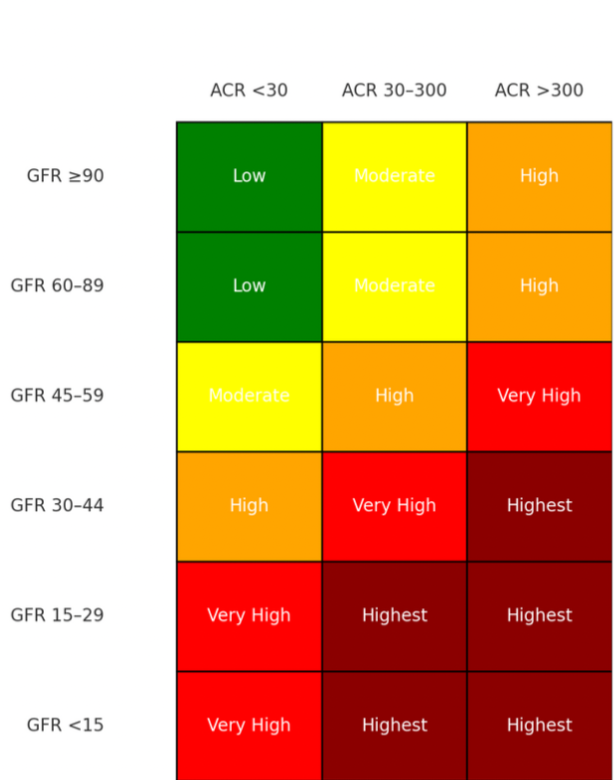
Most transplant centers begin the evaluation in advanced chronic kidney disease (CKD), usually when your eGFR (estimated glomerular filtration rate) is approaching 20 mL/min/1.73 m² or you have other signs that kidney failure may be coming soon. If you are not familiar with how GFR works as a measure of kidney function, our article What Is GFR in CKD explains it in plain language, and our guide to CKD stages shows where that number fits in the 1 through 5 system.
Starting early is not about rushing. It is about timing:
- The workup takes time. Blood tests, heart testing, cancer screening, dental clearance, and a psychosocial review all need to be completed before you can be listed, and some results take weeks to return.
- Early evaluation keeps options open. Patients who are listed before starting dialysis (a preemptive transplant) can often choose the timing of their surgery, which is associated with better outcomes than waiting until after months or years on dialysis.
- Your team can spot problems early. If something in your health needs to be addressed first, such as weight, an infection, or heart disease, finding it during evaluation gives you time to work on it rather than discovering it at the last minute.
Who is on the transplant team?
The kidney transplant evaluation is run by a multidisciplinary team from a transplant center, and meeting several of these people in one visit is normal:
- Transplant coordinator. Your main point of contact. The coordinator schedules appointments, tracks test results, and relays offers when a kidney becomes available.
- Transplant nephrologist. Oversees your medical management during the workup and after transplant.
- Transplant surgeon. Reviews your surgical history and answers questions about the operation itself.
- Pharmacist. Reviews your current medications and plans for immunosuppression, the drugs that prevent your body from rejecting the new kidney.
- Social worker or psychologist. Assesses support systems, mental health, and practical logistics. This is a standard part of every evaluation, not a judgment on your character.
- Dietitian. Reviews nutrition, especially if you are approaching dialysis or live with diabetes.
- Financial counselor. Explains insurance coverage, out-of-pocket costs, and what happens to your benefits after transplant.
What tests are part of a kidney transplant evaluation?
There is no single national checklist. A 2025 scoping review found substantial variation between transplant center practices in exactly which evaluations are performed, though the core domains were consistent: infection screening, heart disease assessment, peripheral artery disease, and age- and sex-appropriate cancer screening (Boerstra et al., Clin Kidney J). Here is what most patients can expect.
Blood tests and tissue matching
- Blood type and HLA typing. Your blood group and your human leukocyte antigen (HLA) markers are determined. HLA molecules are proteins on the surface of your cells that help your immune system recognize “self.” The closer a donor’s HLA profile matches yours, the lower the risk of rejection; even with an imperfect match, modern immunosuppression makes transplant possible for most people.
- Antibody screening (PRA or cPRA). A panel reactive antibody test checks whether you have developed antibodies against common HLA antigens, which can happen after blood transfusions, pregnancies, or a previous transplant. These antibodies can make matching harder and lengthen the wait; they do not automatically rule out transplant.
- Infection testing. Standard screens include hepatitis B and C, HIV, syphilis, and other infections depending on your history. A positive result does not mean you cannot get a transplant; it means the team will treat or manage the infection first so that immunosuppression is safe.
Heart and lung testing
Kidney failure puts strain on the cardiovascular system, so the kidney transplant evaluation includes an electrocardiogram (ECG), an echocardiogram (an ultrasound of the heart’s structure and pumping function), and sometimes a stress test if your age or risk factors warrant it. Chest imaging is also common to rule out active lung disease before anesthesia and surgery.
Cancer screening by age and sex
Because long-term immunosuppression can affect how cancers develop, centers confirm that routine screenings are up to date: colonoscopy at the appropriate age, mammography for women, prostate evaluation where indicated, and skin exams when risk factors are present. If a cancer is found or was treated recently, the timing of transplant may be adjusted; this is one more reason early evaluation helps.
Imaging, dental clearance, and other checks
Vascular imaging (often an ultrasound, sometimes an angiogram) confirms that the blood vessels in your pelvis can support the new kidney’s artery and vein connections. Dental clearance is standard because untreated gum or tooth infections can become dangerous once you are on immunosuppression; you may be asked to complete any needed dental work before listing.
The kidney transplant evaluation also includes a psychosocial review (support at home, transportation, ability to manage medications) and a financial review. These steps exist for practical reasons: transplant care after surgery is intensive, with frequent lab visits and strict medication schedules, and the team wants to make sure you have the support structure in place before it begins.
Living donor versus deceased donor transplant
A living donor kidney can come from a relative or, increasingly, from a non-related person such as a partner, friend, or even someone who has never met the recipient through directed donation programs. Living donor kidneys tend to last longer than deceased donor kidneys: in large registry data, they function for roughly 15 to 20 years on average compared with about 7 to 10 years for deceased donor kidneys. The surgery can be scheduled when both parties are ready, and the donor’s health status is known in advance rather than discovered at the time of offer.
When a willing donor is not compatible with you, paired exchange programs allow two incompatible pairs to swap donors so that both recipients receive a compatible kidney.
Deceased donor transplant depends on the national waiting list operated by OPTN under federal policy. Wait times vary widely by blood type, antibody levels, and region; in the most recent annual data report, about 11% of adult deceased donor candidates had been waiting five years or more before receiving a kidney.
If you are activated on the waiting list before starting dialysis, your transplant is called preemptive. A meta-analysis of 87 studies covering more than 859,000 patients found that preemptive living donor transplant was associated with about a 26% lower risk of patient death and a 28% lower risk of graft loss compared with starting dialysis first; even for deceased donor kidneys, preemptive listing was associated with a 20% lower risk of graft loss. Our article on preemptive kidney transplant goes deeper into why this timing advantage exists and what it takes to make it work.
What happens after you are approved?

Once the kidney transplant evaluation is complete and the transplant center’s review board approves you, your coordinator registers you with OPTN, the organization that matches donors and recipients across the country. From that point, two systems work in parallel: one tracks how long you have been waiting, and the other decides when a kidney is offered to you.
How waiting time is counted. Under current OPTN policy, an adult’s waiting list time starts at the earliest of three dates: registration with a GFR already at or below 20 mL/min/1.73 m²; the date your GFR falls to that level after you register; or the start of regularly administered dialysis. Because listing does not require you to have started dialysis first, registering early locks in an earlier waiting time if your kidney function has already declined to that point.
How kidneys are offered. When a donor kidney becomes available, the national system ranks candidates using several factors. The most important is EPTS (estimated post-transplant survival), which estimates how long you and your new kidney are expected to survive after transplant compared with other candidates nationally; it is expressed as the percentage of candidates who would be expected to have longer post-transplant survival than you. It is calculated from four inputs: time on dialysis, diabetes status, prior solid organ transplants, and age, and it is updated daily and whenever one of those factors changes. A higher EPTS means the system judges that you would benefit most from receiving a kidney sooner.
Other factors include how well the offered kidney’s expected longevity (summarized by a score called KDPI) fits your situation, along with blood type, HLA match, and antibody levels. You do not need to understand every detail of the algorithm; offers are made in order around the clock, and your coordinator will contact you when one comes in.
If you move or if your circumstances change, you can sometimes be listed at more than one center at once (multiple listing). Test results from your evaluation generally remain valid for about a year, so switching centers does not always mean starting over; ask your coordinator how this would work for you if it applies.
If you are asked to wait
Some candidates are told they are not ready yet. This is usually temporary and specific: the team may ask you to lose weight, stop smoking, treat an infection, or stabilize another condition before listing, with re-evaluation typically in three to six months. It is worth asking exactly what needs to change and what the timeline looks like, because “not yet” is a different answer from “no.”
It also helps to know how centers apply age and weight criteria. The same 2025 scoping review found that obesity and age-related factors are commonly cited reasons for deferral, but strict BMI or age cutoffs were used less often than might be expected; many centers individualize the decision based on overall health rather than a single number. For older adults specifically, evidence supports transplant when overall health allows: in a matched-pair study of patients over 70, there was some early excess mortality after transplant (mostly infection-related), but from about three months onward the survival advantage grew steadily, and five-year survival was about 80% for transplanted patients versus 53% for those who stayed on dialysis.
How to prepare for your evaluation appointment
- Bring a complete list of all medications, including doses and how long you have taken each one.
- Gather medical records from the past several years, especially hospital discharge summaries, imaging reports, and prior test results.
- Let your primary care provider know you are starting a transplant evaluation; they can send records faster than you can collect them yourself.
- Write down questions in advance. Evaluations involve many specialists in a short time, and it is easy to forget what you wanted to ask.
- If cost or insurance coverage worries you, say so at the first visit. The financial counselor exists for exactly this conversation.
The National Kidney Foundation maintains a patient guide to transplant evaluation with its own preparation checklist and questions list if you want a second set of eyes before your first kidney transplant evaluation appointment.
Questions to ask your transplant team
- What does my evaluation timeline look like, and which tests take the longest?
- Am I a candidate for preemptive listing before dialysis, and what would need to be true for that?
- Do I have antibodies that could lengthen my wait, and is there anything that can be done about them?
- If I am not approved today, exactly what needs to change, and when will I be re-evaluated?
- How quickly would I need to respond if a kidney were offered, and what would I have to do in the meantime (travel, time off work)?
- If a family member wants to donate, what would they go through, especially if our kidney disease runs in the family as with polycystic kidney disease?
Bottom line
A kidney transplant evaluation is a structured, multi-specialty review designed to answer two questions: are you healthy enough for surgery and lifelong immunosuppression, and does your support plan need anything added before listing begins? It can take months, it involves more testing than most people expect, and the answers depend on your individual health rather than a single number. If your care team has mentioned transplant, asking “when should we start the evaluation?” is a reasonable next step; from there, you will be referred to a transplant center. A specially trained transplant coordinator will walk you through each piece of the workup. This article is educational and does not replace the judgment of your own clinicians about what is right for you.
Related reading
- Transplant First: Why Preemptive Kidney Transplant May Be Your Best Option: why listing before dialysis is associated with better outcomes, and what it takes to make that happen.
- “What Is GFR in CKD and Why Is It important?”: a plain-language guide to the number that tracks your kidney function.
- CKD Stages 1 Through 5 and Why Does this Matter to Me?: what each stage means for your care plan and for timing decisions like transplant.
- Choosing the Right Path for Your Quality of Life: 4 Dialysis Modality Options: what in-center, home hemodialysis, and peritoneal dialysis look like if you need them while waiting or after a decision.
- Conservative Kidney Care: Just Because You Can, Doesn’t Always Mean You Should: managing CKD without dialysis or transplant, and how that choice is made.
Works Cited
- National Kidney Foundation. Evaluation for kidney transplant. Updated December 11, 2025. https://www.kidney.org/kidney-topics/evaluation-kidney-transplant
- Organ Procurement and Transplantation Network (OPTN). OPTN policies. Updated August 17, 2026. https://www.hrsa.gov/sites/default/files/hrsa/optn/optn_policies.pdf
- Boerstra BA, Pippias M, Kramer A, et al. The evaluation of kidney transplant candidates prior to waitlisting: a scoping review. Clin Kidney J. 2025;18(1):sfae377. PubMed
- Rana Magar R, Knight SR, Maggiore U, et al. What are the benefits of preemptive versus non-preemptive kidney transplantation? A systematic review and meta-analysis. Transplant Rev (Orlando). 2023;37(4):100798. PubMed
- Lentine KL, Smith JM, Lyden GR, et al. OPTN/SRTR 2023 Annual Data Report: Kidney. Am J Transplant. 2025;25(2S1):S22–S137. PubMed
- Chaudhry D, Chaudhry A, Peracha J, et al. Survival for waitlisted kidney failure patients receiving transplantation versus remaining on waiting list: systematic review and meta-analysis. BMJ. 2022;376:e068769. PubMed
- Shi B, Ying T, Chadban SJ. Survival after kidney transplantation compared with ongoing dialysis for people over 70 years of age: A matched-pair analysis. Am J Transplant. 2023;23(10):1551–1560. PubMed