Renal Denervation for Resistant Hypertension: What Patients With Kidney Disease Should Know
If your blood pressure stays high even though you are taking several medications, you may have heard about a newer procedure called renal denervation for resistant hypertension. It is getting more attention because major heart societies now include it in updated treatment guidance, and the FDA has cleared a device for use in certain adults with uncontrolled hypertension. But the hype can outrun the facts. This is not a cure-all, and it is not meant for everyone with kidney disease or hard-to-control blood pressure.
The most useful way to think about renal denervation is this: it may become an option for some people whose blood pressure remains high despite serious efforts with lifestyle changes and medication. It belongs in the conversation for selected patients, but it does not replace the basics of blood pressure care, and it does not remove the need for an accurate diagnosis, careful follow-up, and good daily habits. The FDA’s approval language is explicit that the Paradise Ultrasound Renal Denervation System is an adjunctive treatment, meaning it is used in addition to lifestyle measures and blood pressure medicine, not instead of them.
What is renal denervation?
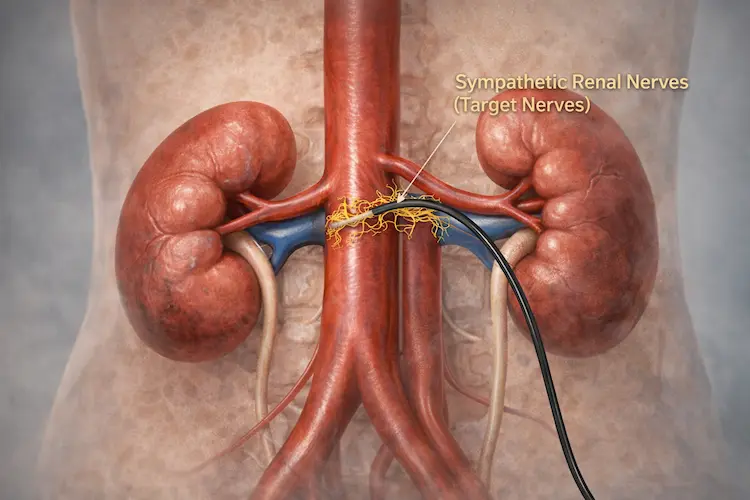
Renal denervation is a catheter-based procedure that targets nerves around the kidney arteries. Those nerves help regulate blood pressure through the body’s sympathetic nervous system. During the procedure, a specialist threads a catheter through an artery and delivers energy around the renal arteries to reduce overactive nerve signaling that may be helping drive high blood pressure. The goal is to lower blood pressure in a more durable way than simply adding another pill.
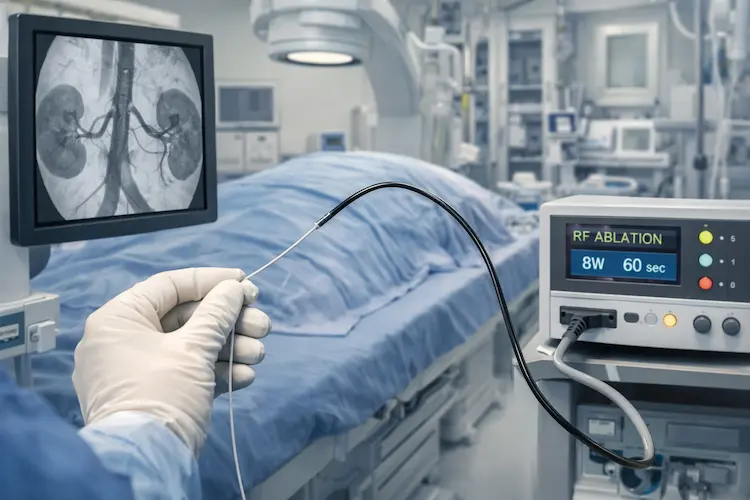
For patients, the appeal is obvious. A treatment that does not depend on remembering another daily medication sounds attractive, especially if blood pressure has remained stubbornly high for years. But that does not mean every patient with elevated readings should be rushed toward a procedure. Updated U.S. and European guidance treats renal denervation as a selective option for resistant hypertension, not as standard first-line care.
Why is everyone talking about it now?
Two things changed. First, the evidence is stronger than it used to be. Earlier enthusiasm for renal denervation cooled off years ago when some studies were disappointing, but more recent sham-controlled trials showed that the procedure can truly lower blood pressure compared with a placebo-style procedure. Second, guidelines caught up. The 2025 AHA/ACC multisociety hypertension guideline replaced the 2017 U.S. guideline and formally addresses resistant hypertension and renal denervation. The 2024 ESC hypertension guideline also made recommendations on renal denervation for the first time.
But even now, the language stays measured. The ESC states that renal denervation is not recommended as first-line treatment and is not recommended in patients with secondary hypertension or with markedly reduced kidney function below an eGFR of 40 mL/min/1.73 m². That is not the language of a miracle breakthrough. It is the language of a therapy that may help the right patient under the right circumstances.
What does “resistant hypertension” really mean?
This part matters because the phrase gets used loosely. Resistant hypertension usually means blood pressure stays above goal even though a person is taking multiple blood pressure medicines, typically including a diuretic, at appropriate doses. Before anyone says a patient has resistant hypertension, clinicians should make sure the blood pressure readings are accurate, medicines are actually being taken, sodium intake is not sabotaging control, and another cause is not being missed. The 2025 CKJ review on resistant hypertension in CKD stresses exactly this kind of structured evaluation.
That workup is especially important in kidney disease. CKD itself can make blood pressure harder to control through fluid retention, hormonal changes, and vascular stiffness. At the same time, kidney patients may also have sleep apnea, primary aldosteronism, medication side effects, or other overlapping issues. The updated 2025 U.S. guideline commentary highlights broader screening for primary aldosteronism in resistant hypertension, because some patients thought to have “impossible” blood pressure actually have a specific treatable cause. See more specifics about resistant hypertension in this related post: Resistant and Secondary Hypertension.
Can it help patients with chronic kidney disease?
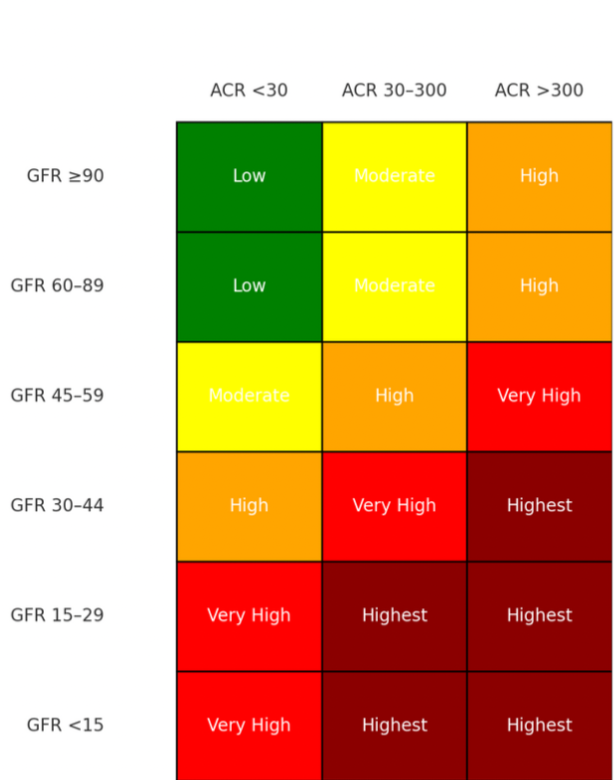
Potentially, yes, but with limits. This is where KDIGO and the newer CKD literature have relevance. KDIGO’s current guideline specifically focused on blood pressure in CKD is still the 2021 Blood Pressure in CKD Guideline, while the 2024 KDIGO CKD Guideline is the broader updated framework for overall CKD care. Together, they remind us that blood pressure management in CKD is part of a bigger picture that includes kidney risk, protein in the urine, cardiovascular risk, and the quality of blood pressure measurement itself.
More recent CKD-focused reviews suggest that renal denervation may be a reasonable option for selected CKD patients with resistant hypertension, particularly when standard therapy has not been enough or side effects are becoming a major problem. But these same sources are careful: they describe it as a promising additional treatment option, not definitive therapy, and they note that evidence is still more limited in advanced CKD. European recommendations also continue to draw the line at eGFR below 40 mL/min/1.73 m².
So the patient takeaway is simple: kidney disease does not automatically rule renal denervation out, but it absolutely does not mean you are a candidate either. Kidney function, anatomy, blood pressure pattern, medication history, and the reason your pressure is still high all matter.
What can the procedure actually do?
This is where expectations need to stay realistic. Modern trials show that renal denervation can lower blood pressure, but usually by a modest amount rather than by wiping hypertension away. In recent studies, the average extra reduction compared with a sham procedure was meaningful but not dramatic. This was still significant because even modest sustained blood pressure improvement may reduce long-term cardiovascular risk, but it is very different from saying the procedure cures resistant hypertension.
It also does not instantly end the need for medication in most patients. Many people who undergo renal denervation still need blood pressure pills afterward. The procedure may help bring numbers down, reduce medication burden in some cases, or improve control when standard treatment has not been enough. But patients should not go into it expecting to throw all their prescriptions away. The FDA approval itself frames it as an add-on therapy.
Who might be a candidate?
In plain English, the best candidate is someone whose blood pressure remains truly hard to control despite a serious, organized treatment effort. That usually means confirmed resistant hypertension, a medication regimen that has already been pushed appropriately, and an evaluation showing there is not a simpler fix being missed. The 2025 AHA/ACC guideline places renal denervation in a formal treatment pathway and emphasizes multidisciplinary evaluation, not casual referral.
Patients may be more likely to discuss it if they have struggled with medication intolerance, persistent poor control despite multiple drugs, or major difficulty maintaining blood pressure control over time. But even then, shared decision-making matters. Updated heart society guidance treats it as something to consider, not something every patient with difficult hypertension should automatically pursue.
What should patients ask before getting excited about it?
A good first question is: Do I really have resistant hypertension, or is something else going on? Another is: Has my blood pressure been measured accurately and confirmed outside the office if needed? Kidney patients should also ask how their kidney function affects eligibility, whether there may be a secondary cause of hypertension, and what the realistic goal of the procedure would be in their case.
Just as important, ask what happens after the procedure. Will medications likely continue? How will success be measured? Who will follow blood pressure over time? Be sure to ask about the individual experience of the specialist performing the procedure, including complication rates. Informed consent should be based on an open discussion of all of the risks and benefits of the procedure, not just signing a boiler-plate consent form. A legitimate discussion of renal denervation should sound careful and grounded, not like a sales pitch.
Bottom line
Renal denervation for resistant hypertension is a real development, not vaporware. It now has stronger trial support, FDA-cleared device availability, and recognition in updated U.S. and European guidance. But for patients with CKD, the honest message is still measured: this is a possible option for selected people with truly hard-to-control blood pressure, not a shortcut around medications, and not a guaranteed fix.
If you have chronic kidney disease and your blood pressure remains high despite treatment, the first move is not to chase a procedure headline. The first move is to make sure the diagnosis is right, the readings are accurate, the medication plan is optimized, and the bigger CKD picture is being addressed. Once that is done, renal denervation may become a worthwhile conversation.
Works Cited
- KDIGO. Blood Pressure in CKD. Current KDIGO blood pressure guideline page listing the 2021 guideline.
- KDIGO. 2024 Clinical Practice Guideline for the Evaluation and Management of Chronic Kidney Disease.
- AHA/ACC et al. 2025 https://www.acc.org/guidelines/hubs/high-blood-pressureGuideline for the Prevention, Detection, Evaluation, and Management of High Blood Pressure in Adults.
- ESC. New ESC Hypertension Guidelines press summary, 2024.
- Hypertension Editors’ View of the 2025 Guideline.
- ESC educational review: What is new in resistant hypertension?
- AHA review: Renal Denervation for the Treatment of Hypertension.
- FDA/AHajournals indexed approval and guideline materials on renal denervation.
- AHA article on renal denervation in moderate to severe CKD.
[blood pressure vs chronic kidney disease]
[protein in the urine and kidney risk]
[how to measure blood pressure correctly at home]
[resistant hypertension in CKD]
[when blood pressure medicines need to be adjusted]