Why Is My Blood Pressure Uncontrolled? Understanding Resistant and Secondary Hypertension
You take your medications. You’ve watched the salt. And still, when you sit down in the clinic, that top number is stubbornly above where it should be for you. If this sounds familiar, you’re not alone, and it doesn’t mean you’re doing something wrong.
It does mean it’s time to look closer. High blood pressure that stays above goal despite several medications get special consideration and in some people, there is an underlying cause that can be found and treated. These situations are coined resistant and secondary hypertension, respectively.
What Resistant Hypertension Actually Means
Hypertension is high blood pressure, a sustained force against your artery walls that can damage the heart, brain, kidneys, and eyes over time. For most people, one or two medications plus lifestyle changes are enough; for some, they’re not.
Clinicians use a specific definition of resistant hypertension: blood pressure remains above goal despite three complementary antihypertensive medications at maximally tolerated doses, including an appropriate diuretic (a “water pill”), or four or more medications are needed to achieve control.
Simply taking several pills doesn’t qualify, nor does one high reading. The label matters because it triggers a specific next step: confirm the resistance is real, then look for secondary causes. Four related terms help:
- Uncontrolled hypertension : blood pressure above goal, whatever the cause.
- Apparent treatment-resistant hypertension : readings that look resistant but may be explained by measurement issues, white-coat effect, or missed doses.
- True resistant hypertension : confirmed high out-of-office blood pressure despite verified optimal therapy.
- Secondary hypertension : high blood pressure from an identifiable underlying condition (kidney disease, a hormone problem, a narrowed artery) rather than the usual mix of genes and lifestyle (“primary” or “essential”).
First: Make Sure It’s Truly Resistant
Before labeling blood pressure “resistant,” it’s worth ruling out what doctors call pseudoresistance, when the numbers look uncontrolled but the real problem is simpler to fix. Common contributors:
- Measurement error. A cuff that’s too small, an unsupported arm, talking during the reading, or an uncalibrated machine can all push readings up.
- White-coat effect. Blood pressure rises in clinical settings for many people even when it’s normal at home.
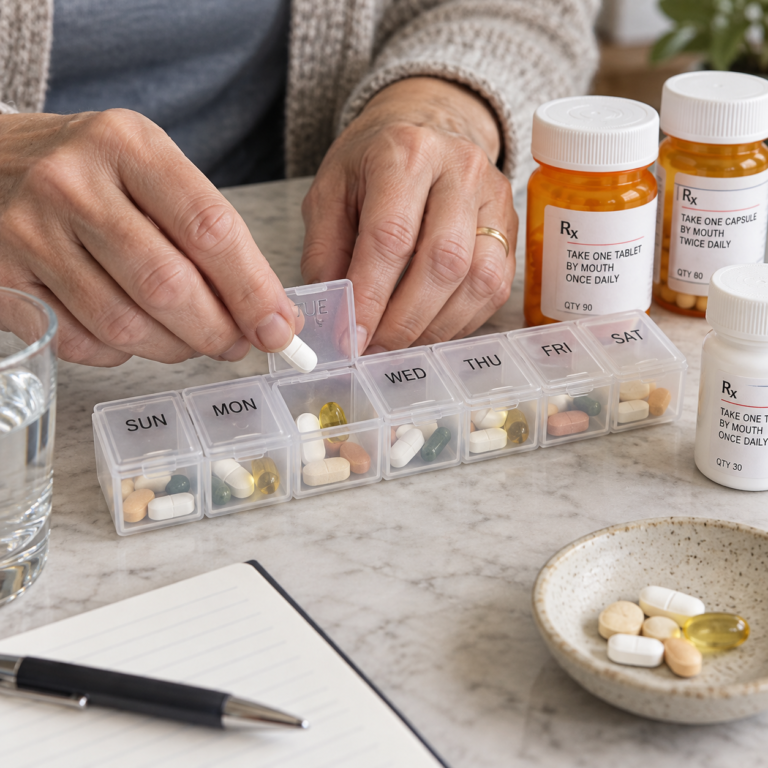
- Missed doses. Forgetting pills, or stopping them because of side effects, is one of the most common reasons blood pressure stays high.
- Submaximal doses or mismatched combinations. Low doses of several drugs often work less well than a maximally tolerated regimen, and some pairings simply don’t complement each other.
- Interfering medications and substances. NSAID pain relievers (ibuprofen, naproxen), decongestants containing pseudoephedrine, stimulants, some herbal products such as licorice, and heavy alcohol use can all raise blood pressure or blunt medication effects.
- Excess dietary sodium. Salt is the most common dietary driver of treatment resistance, and it matters even more if you have kidney disease.
Home blood-pressure monitoring with a validated cuff gives your care team a truer picture than any single office visit. Ambulatory blood-pressure monitoring (ABPM), a wearable device that measures pressure automatically over 24 hours, can confirm the pattern and rule out white-coat or “masked” hypertension.
When to Look for a Secondary Cause
True resistant hypertension is a strong signal that an underlying cause may be at work; guidelines recommend looking for it, because finding the cause often changes treatment, sometimes dramatically. Secondary hypertension fall into these main categories:
- Primary aldosteronism : excess production of a hormone called aldosterone (covered next)
- Kidney parenchymal disease / chronic kidney disease (CKD) : damaged filtering units retain salt and water
- Obstructive sleep apnea (OSA) : repeated nighttime breathing pauses keep the nervous system on high alert, raising pressure
- Renovascular disease : narrowing of one or both kidney arteries (covered below)
- Medication or substance causes : including some prescription drugs, over-the-counter products, and supplements
Less common endocrine and vascular causes exist too (Cushing’s syndrome, pheochromocytoma, thyroid disorders), considered when symptoms point that way. The key point: you don’t need every test; your care team uses your history, exam, labs, and blood-pressure pattern to choose what makes sense for you.
Primary Aldosteronism: The Most Common Hidden Cause
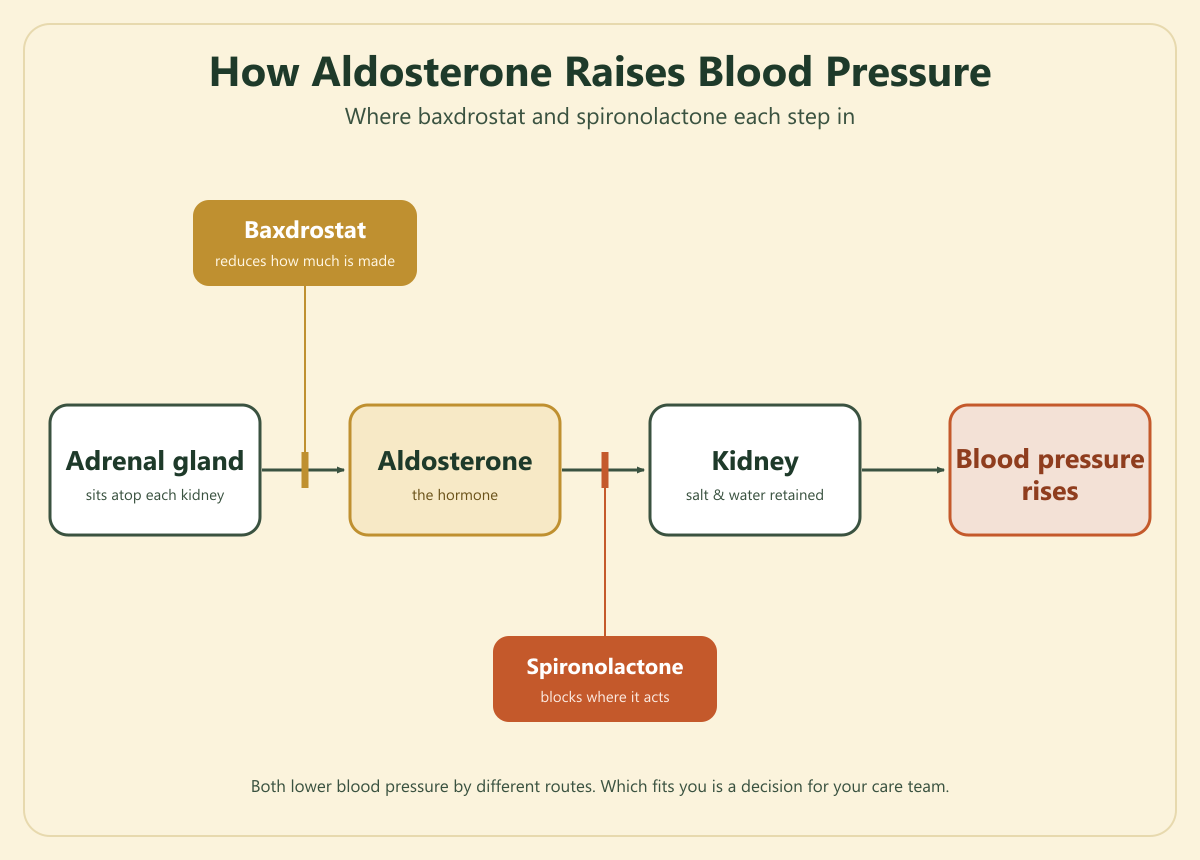
Aldosterone is a hormone from the adrenal glands atop your kidneys that helps regulate salt and fluid balance, but when too much is produced, the kidneys hold onto sodium (and water), potassium can fall, and blood pressure climbs. Primary aldosteronism means the adrenals overproduce it on their own.
It’s now recognized as the most common cause of secondary hypertension, and it’s under-recognized in resistant cases. Studies suggest it may account for up to about 20–30% of people with resistant hypertension; the 2025 AHA/ACC guideline recommends screening all such patients for excess aldosterone, even when potassium is normal.
Two points matter most:
- You don’t need low potassium to have it. Low potassium is a classic clue, but many people with primary aldosteronism have normal potassium, which is exactly why “screen only if potassium is low” misses so many cases.
- It’s treatable. Treatment depends on whether one or both glands are overactive: surgery for a single adenoma, or medication that blocks aldosterone’s effects, such as spironolactone.
Screening typically starts with an aldosterone-renin ratio blood test, followed by confirmatory testing if indicated; the 2025 Endocrine Society guideline even suggests considering screening in all people with high blood pressure, not just resistant cases. If your numbers are hard to control, this is a reasonable conversation.
Kidney Disease Relationship to Resistant and Secondary Hypertension
High blood pressure and chronic kidney disease feed each other: damaged kidneys retain salt and water and overactivate the hormone system that raises pressure, while uncontrolled pressure accelerates kidney damage. If you live with CKD, your goals may be more specific: the KDIGO 2021 guideline suggests a systolic (top number) target below 120 mmHg when tolerated, measured using standardized office technique.
IMPORTANT: For people with CKD and protein in the urine (albuminuria), an ACE inhibitor or ARB is generally recommended even at normal blood pressure, but these medicines require monitoring of kidney function and potassium after starting or adjusting doses. Your nephrologist will set your personal target based on your stage, labs, and tolerance.
For a deeper look at how these conditions interact, see our articles on high blood pressure and kidney disease and blood pressure vs. chronic kidney disease. Understanding your numbers, including what GFR means (what is GFR in CKD?), makes these conversations easier.
Renovascular Hypertension: When Narrowing of a Kidney Artery Matters
Each kidney receives its blood from a single renal artery branching off the aorta, the body’s main artery. Renovascular hypertension occurs when one or both of those arteries narrows, renal artery stenosis , reducing blood flow to the kidney. Sensing low perfusion, the kidney releases renin and sets off the renin-angiotensin-aldosterone system (RAAS), a hormone cascade that constricts vessels and promotes sodium retention, producing high blood pressure driven by the kidney itself.
There are two main types of renal artery narrowing:
- Atherosclerotic renal artery stenosis : plaque buildup, the same process that narrows heart and leg arteries. More common in older adults with cardiovascular risk factors such as smoking, diabetes, or high cholesterol.
- Fibromuscular dysplasia (FMD) : a non-atherosclerotic condition causing abnormal development of the artery wall, often producing a “string-of-beads” appearance on imaging. It tends to affect younger women and follows different treatment logic than atherosclerotic disease.
Clues that may raise suspicion include:
- Sudden onset or marked worsening of previously well-controlled blood pressure
- Resistant hypertension despite appropriate therapy
- Otherwise unexplained decline in kidney function
- A significant drop in kidney function after starting or intensifying an ACE inhibitor or ARB (in the right clinical context)
- Recurrent sudden-onset pulmonary edema (“flash” heart-failure episodes)
- Kidneys of noticeably different sizes on imaging, or a whooshing sound (bruit) heard over the abdomen
Important: not everyone with resistant hypertension needs renal-artery imaging; your clinician weighs these clues against the whole picture before ordering tests such as ultrasound, CT/MR angiography, or catheter-based angiography.
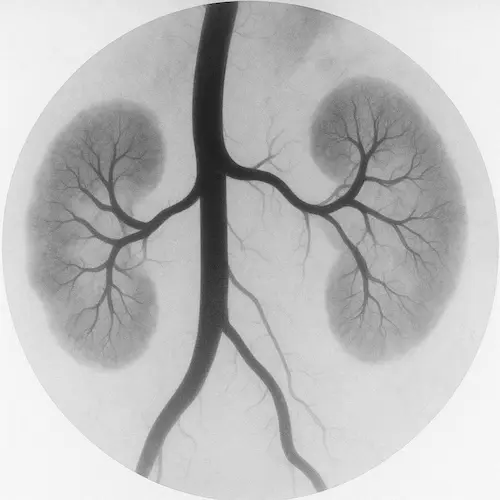
Why a Narrowed Artery Does NOT Automatically Mean a Stent
For decades, the reflex was to open any narrowed renal artery with a balloon and stent. Two large randomized trials changed that: CORAL (2014) and ASTRAL found that for most people with atherosclerotic renal artery stenosis, adding stenting to optimal medical therapy did not improve blood-pressure control or kidney outcomes versus medical therapy alone.
That doesn’t mean the narrowed artery can be ignored; it means medical therapy is first-line for atherosclerotic disease:
- Aggressive cardiovascular risk management: statins for cholesterol, antiplatelet therapy (often aspirin), and smoking cessation
- Standard antihypertensive treatment, often including an ACE inhibitor or ARB, valuable here but requiring monitoring of potassium and kidney function after starting or dose changes
When Renal-Artery Intervention May Still Help
Revascularization, opening the artery with angioplasty (balloon dilation), with or without a stent, remains important for selected patients. Referral may be reasonable when:
- Genuinely resistant hypertension that persists despite optimal medical therapy
- Progressive kidney-function decline in a setting consistent with reduced blood flow to the kidney
- Recurrent flash pulmonary edema or acute heart-failure episodes
When both arteries are significantly narrowed, or there is only one functioning kidney, the calculus changes. Those kidneys rely heavily on the narrowed vessels and RAAS-driven pressure to keep filtering; ACE inhibitors/ARBs carry higher risk of kidney-function decline there, so intervention needs careful individualized assessment by a vascular specialist.
FMD deserves its own note: because it is a different disease in younger patients without widespread atherosclerosis, balloon angioplasty (usually without stenting) has a more favorable role; many people with FMD achieve blood-pressure control or even cure after successful dilation. The “stents don’t help” conclusion from the atherosclerotic trials does not apply to FMD.
Standard Treatment Before Newer Therapies
Before reaching for newer options, guidelines emphasize optimizing the foundation: three complementary drug classes
- ACE inhibitor or ARB (blocks RAAS)
- Calcium-channel blocker (relaxes blood vessels)
- Effective diuretic therapy (removes excess salt and water)
Two refinements matter here. First, thiazide-like diuretics such as chlorthalidone or indapamide are often preferred over short-acting alternatives because of their longer duration and stronger outcome evidence, though the right choice depends on your kidney function; when eGFR (estimated glomerular filtration rate) is low, loop diuretics like furosemide work better. See our guide to diuretics in CKD.
Second, once three drugs are at work, spironolactone , which blocks aldosterone’s receptor , is the best-studied add-on: in the PATHWAY-2 trial it lowered home systolic blood pressure about 8.7 mmHg more than placebo over roughly three months, outperforming two other common add-ons (doxazosin and bisoprolol).
If you have CKD, potassium monitoring becomes central: ACE inhibitors, ARBs, and spironolactone can all raise potassium, and your nephrologist or renal dietitian may customize the combination to match your stage and labs. Sodium reduction remains one of the most underused “medications”: KDIGO suggests less than 2 grams per day for people with high blood pressure and CKD, our kidney-friendly nutrition guide is a good starting point.
A New Way to Target Aldosterone: Baxdrostat
Because excess aldosterone is so common in many cases of secondary hypertension, it makes sense to target the hormone itself. In 2026, the U.S. Food and Drug Administration approved baxdrostat, an aldosterone synthase inhibitor , a drug that reduces how much aldosterone your adrenal glands produce, rather than blocking the receptor where it acts (the way spironolactone does).
Its approved role is specific: add-on therapy for adults whose blood pressure remains inadequately controlled on other antihypertensive medications. It’s not a replacement for standard treatment, and it isn’t for everyone with resistant hypertension; your clinician decides whether it fits you.
In the pivotal BaxHTN trial (794 adults with uncontrolled or resistant hypertension already on at least two blood-pressure medications, including a diuretic), after 12 weeks:
- The higher dose (2 mg) lowered systolic blood pressure by an average of 15.7 mmHg from baseline, versus 5.8 mmHg with placebo, a difference of about 9.8 mmHg beyond background therapy alone
- Diastolic (bottom number) fell by 6.9 vs. 3.0 mmHg
- In a blinded “randomized withdrawal” phase, when some participants were switched back to placebo, their pressure rose again, evidence the effect was real
Key safety considerations:
- Hyperkalemia (high potassium) is the most common adverse reaction; in trials, potassium above 6.0 mmol/L occurred in about 3% of people on the higher dose versus 0.4% on placebo
- Hyponatremia (low sodium) can also occur
- Potassium and sodium are checked before starting and periodically during treatment, with more frequent checks if you’re 65 or older, have diabetes or CKD, or take other potassium-raising drugs
- Safety and effectiveness haven’t been established in people whose eGFR is below 45 mL/min/1.73 m², relevant for many readers living with advanced CKD
- Certain medications that induce the CYP3A enzyme can lower baxdrostat levels, so your prescriber will review your full medication list
One honest caveat: there are no controlled trials yet showing that baxdrostat reduces heart attacks or strokes. The expected benefit is the blood-pressure lowering itself, which, like all antihypertensives, carries the established risk-reduction benefits of lower pressure over time.
Renal Denervation: Another Option to Know About
One more contemporary option deserves brief mention: renal denervation (RDN), a catheter-based procedure that quiets the nerves around the kidney arteries to reduce the nervous system’s drive on blood pressure. The 2025 AHA/ACC guideline lists RDN as an option for resistant hypertension, after multidisciplinary evaluation and shared decision-making. Two clarifications: secondary causes should be evaluated first (RDN doesn’t fix primary aldosteronism or a narrowed artery), and RDN is not angioplasty or stenting; it targets nerves, not the artery opening, so people with significant renal-artery narrowing are generally not candidates.
What to Take Away
- “Resistant” has a specific definition: above goal despite three appropriate medications at maximally tolerated doses (including a diuretic), or needing four or more drugs
- Home blood-pressure monitoring helps confirm whether resistance is real, and rules out white-coat effect and measurement error
- True resistant hypertension warrants evaluation for secondary causes, especially primary aldosteronism (which can occur with normal potassium)
- For kidney-artery narrowing from atherosclerosis, medical therapy comes first; intervention is reserved for selected patients, while FMD often responds well to angioplasty
- Newer tools exist: spironolactone is a well-studied add-on, and baxdrostat (2026) targets aldosterone production itself, with careful electrolyte monitoring
Questions Worth Asking Your Care Team
- Could my blood pressure be truly resistant rather than simply uncontrolled?
- Has home or ambulatory monitoring confirmed what we’re seeing in the office?
- Could any medication, supplement, or over-the-counter product I’m taking be raising my pressure?
- Should I be evaluated for primary aldosteronism, even if my potassium is normal?
- Is there a reason to suspect kidney-artery narrowing in my case?
- Is my current diuretic the best choice for my kidney function?
- Are my potassium and sodium levels affecting which medications are safe for me?
- Given everything we’ve tried, would newer options like baxdrostat or renal denervation be relevant to my situation?
A Note on This Article
This article is educational information only, not medical advice, diagnosis, or treatment, and it doesn’t replace the judgment of your own care team. Blood-pressure management is personal: targets, drug choices, and monitoring depend on your kidney function, labs, other conditions, and medications. Your nephrologist or renal dietitian may customize any recommendation here to match your stage and labs.
Works Cited
- Jones DW, Ferdinand KC, Taler SJ, et al. 2025 AHA/ACC/AANP/AAPA/ABC/ACCP/ACPM/AGS/AMA/ASPC/NMA/PCNA/SGIM Guideline for the Prevention, Detection, Evaluation and Management of High Blood Pressure in Adults. Hypertension. 2025;82(10):e212–e316.
- Harrison DG, Touyz RM. The Hypertension Editors’ View of the 2025 Guideline for the Prevention, Detection, Evaluation, and Management of High Blood Pressure in Adults. Hypertension. 2025;82(10):e193–e195.
- Flack JM, Azizi M, Brown JM, et al.; BaxHTN Investigators. Efficacy and Safety of Baxdrostat in Uncontrolled and Resistant Hypertension. N Engl J Med. 2025;393(14):1363–1374.
- U.S. Food and Drug Administration. Full prescribing information for baxdrostat tablets (approved May 15, 2026). DailyMed.
- Cooper CJ, Gutierrez CH, Geary RB, et al.; CORAL Investigators. Stenting and Medical Therapy for Atherosclerotic Renal-Artery Stenosis. N Engl J Med. 2014;370(1):13–22.
- O’Keeffe H, Green D, de Bhailis A, et al.; ASTRAL Investigators. Long Term Outcomes After Renal Revascularization for Atherosclerotic Renovascular Disease in the ASTRAL Trial. Circ Cardiovasc Interv. 2024;17(9):e013979.
- Grillo A, Lepidi S, Puato M. Atherosclerotic Renal Artery Stenosis in the Post-CORAL Trial Era: A Narrative Review. Curr Probl Cardiol. 2026;51(1):103205.
- Gornik HL, Persu A, Adlam D, et al. First International Consensus on Fibromuscular Dysplasia: Diagnostic and Treatment Recommendations of the ESH/SVM Working Group. J Hypertens. 2019;37(2):229–252.
- Adler GK, et al. Primary Aldosteronism: An Endocrine Society Clinical Practice Guideline. J Clin Endocrinol Metab. 2025;110(9):2453–2495.
- Bioretto F, et al. Prevalence of Primary Aldosteronism in Patients With Hypertension: A Systematic Review and Meta-Analysis. Int J Mol Sci. 2022;23(9):4803.
- Williams B, Umpierrez G, Mancia G, et al.; PATHWAY-2 Investigators. Spironolactone versus Placebo in Resistant Hypertension (PATHWAY-2). Lancet. 2015;386(9999):2059–2068.
- Cheung AK, et al. KDIGO 2021 Clinical Practice Guideline for the Management of Blood Pressure in Chronic Kidney Disease. Kidney Int. 2021;99(3S):S1–S87.