Pregnancy With Kidney Disease: Can You Have a Healthy Baby?
If you live with chronic kidney disease (CKD) and are thinking about starting a family, you may have been told to be cautious. Or you may not have had the conversation at all. Advance planning for pregnancy with kidney disease is an important step in understanding the associated risks and statistics. A recent review in the American Journal of Kidney Diseases notes that up to 6% of women of childbearing age have CKD, yet reproductive counseling is still underemphasized in nephrology care. That gap leaves many people with exactly the questions this article answers: can I get pregnant? What risks do my baby and I face? And what birth control is actually safe for my kidneys?
The short answer is that pregnancy is possible at every stage of CKD, including on dialysis or after a kidney transplant; the honest answer is that your personal risk depends on your kidney function, blood pressure, and whether protein is leaking into your urine. This article walks through fertility, preconception planning by stage, the medication review that must happen first, what the outcome numbers show (especially with proteinuria), safe contraception options, and menopause considerations. It is a preparation tool for conversations with your care team, not a substitute for them.
Fertility in CKD: What Changes, and When
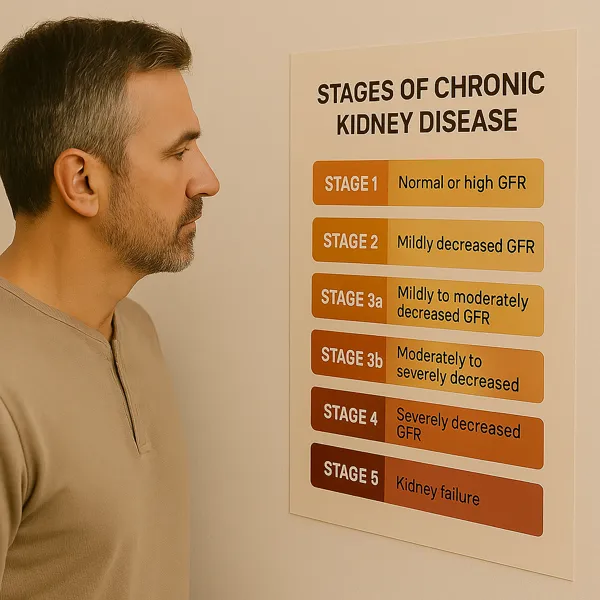
Your ability to conceive does not switch off when you are diagnosed with CKD. In the earlier stages (stages 1 and 2), fertility is generally preserved, and many people conceive without difficulty. For a refresher on what your eGFR (estimated glomerular filtration rate) number means and how CKD is staged, see what is GFR in CKD? and our guide to CKD stages 1 through 5.
The picture shifts as kidney function declines. In advanced CKD and on dialysis, fertility drops from a mix of hormonal changes, medication effects, and the physical toll of disease. Healthy kidneys help regulate the hormones that drive your cycle and ovulation; when they falter, the hypothalamic-pituitary-gonadal axis (the brain-to-ovary signaling loop) can be disrupted: estrogen and progesterone fall, luteinizing hormone rises, and prolactin builds up because the kidneys clear it more slowly. The result is irregular or absent periods, which makes conception harder.
A 2022 systematic review found that about two thirds of women on dialysis had menstrual abnormalities, with the highest rates of missed or irregular periods among those on hemodialysis. Women with kidney disease also tend to reach menopause earlier: on average, women on dialysis go through menopause four to five years sooner than the general population, and their overall reproductive lifespan is shorter (about 32 years versus about 37).
Two reassuring points. A kidney transplant rapidly restores much of this hormonal balance, often within weeks to six months, and many people regain regular cycles and fertility afterward, though not always fully. And “reduced” does not mean “absent”: conception is possible at every stage, which is exactly why the planning steps below matter.
Preconception Counseling: Planning Before You Try, By Stage
Preconception counseling means sitting down with your care team before you try to conceive, to line up a plan that protects both of you. A 2025 KDIGO (Kidney Disease: Improving Global Outcomes) conference report is clear that every woman of reproductive age known to have CKD should be offered this conversation, ideally from the first nephrology visit; if you are not yet working with a kidney specialist, our article on what a nephrologist does explains why that relationship is worth building early. The counseling covers likely outcomes for mother and baby, ideal timing for pregnancy, fertility options if needed, medication management, and practical questions such as what happens if a pregnancy needs to end.
What that counseling looks like depends on where you are in your kidney journey:
- Stages 1 to 2 (eGFR 60 or higher): If your blood pressure is well controlled and you have little or no protein in your urine, the chance that pregnancy worsens your kidney function is low. Focus on the basics: start folic acid, get blood pressure into range, review medications, and control diabetes if you have it.
- Stage 3 (eGFR 30 to 59): Risk begins to climb. Guidelines recommend expert, multidisciplinary preconception counseling here, typically with both a nephrologist and an obstetrician experienced in high-risk pregnancy. You will talk through your specific risks and set monitoring goals before conception.
- Stages 4 to 5 and dialysis: Fertility is lower and the stakes are higher. Counseling should include the real possibility that you may need to start or intensify dialysis during pregnancy, which modality and schedule would fit, and whether a vascular access (the blood-vessel setup for hemodialysis) needs to be planned in advance. Outcomes are better when pregnancy is well prepared rather than unexpected.
- After kidney transplant: Fertility returns partially and outcomes are generally better than on dialysis, but not as good as with native kidneys at full function. Many teams suggest waiting until the transplanted kidney has been stable for a period (often six to twelve months or more) and your immunosuppression is adjusted before trying to conceive.
A few threads run through every stage: aim for a healthy weight, keep blood pressure optimized, take folic acid before conception, correct vitamin D and calcium if low, and plan to be cared for at a center with high-risk obstetric and neonatal experience (which matters most in advanced CKD). If diabetes is part of your picture, our article on diabetic kidney disease covers why tight glucose control before pregnancy matters even more.
The Medication Review That Must Happen First
IMPORTANT: If you are pregnant or planning to become pregnant, tell your nephrologist right away. Many of the medicines used to slow CKD progression and control blood pressure can harm a developing baby, and some must be stopped before conception rather than after a positive test. This is not something to manage on your own; it is exactly what your care team is there to handle, but only if they know early.
Some kidney-protective drugs are teratogenic (capable of causing birth defects or pregnancy loss):
- ACE inhibitors and ARBs (the blood-pressure medicines that also protect the kidneys) can damage a baby’s developing kidneys and amniotic fluid levels. They should be switched to pregnancy-safe alternatives such as labetalol, nifedipine, or methyldopa, ideally before conception and within days of a positive test if you are already on them.
- Mycophenolate mofetil (an immunosuppressant used in some kidney diseases and after transplant) is linked to miscarriage and birth defects and should be stopped well before pregnancy, often switched to azathioprine.
- Cyclophosphamide and methotrexate are also teratogenic and must not be taken during pregnancy.
Beyond the classic immunosuppressants, newer guideline-directed therapies need review too. SGLT2 inhibitors (a class now widely used to slow CKD progression) have no established safety record in pregnancy and are generally stopped before conception. Finerenone, a mineralocorticoid receptor antagonist, likewise lacks pregnancy safety data. Statins for cholesterol are not used during pregnancy. And if you take an anticoagulant such as warfarin, your team will discuss safer alternatives for the time around conception and through pregnancy. For broader context on how blood-pressure medicines fit into kidney care, see our article on high blood pressure and kidney disease.
The flip side is encouraging: several common medicines are compatible with pregnancy, including labetalol, nifedipine, methyldopa, low-dose aspirin (often used to lower preeclampsia risk), prednisone, azathioprine, tacrolimus, cyclosporine, and hydroxychloroquine. The point is not that you must give up treatment; the right regimen changes, and your nephrologist should make those changes deliberately before you conceive.
Risks of Pregnancy with Kidney Disease: Statistics
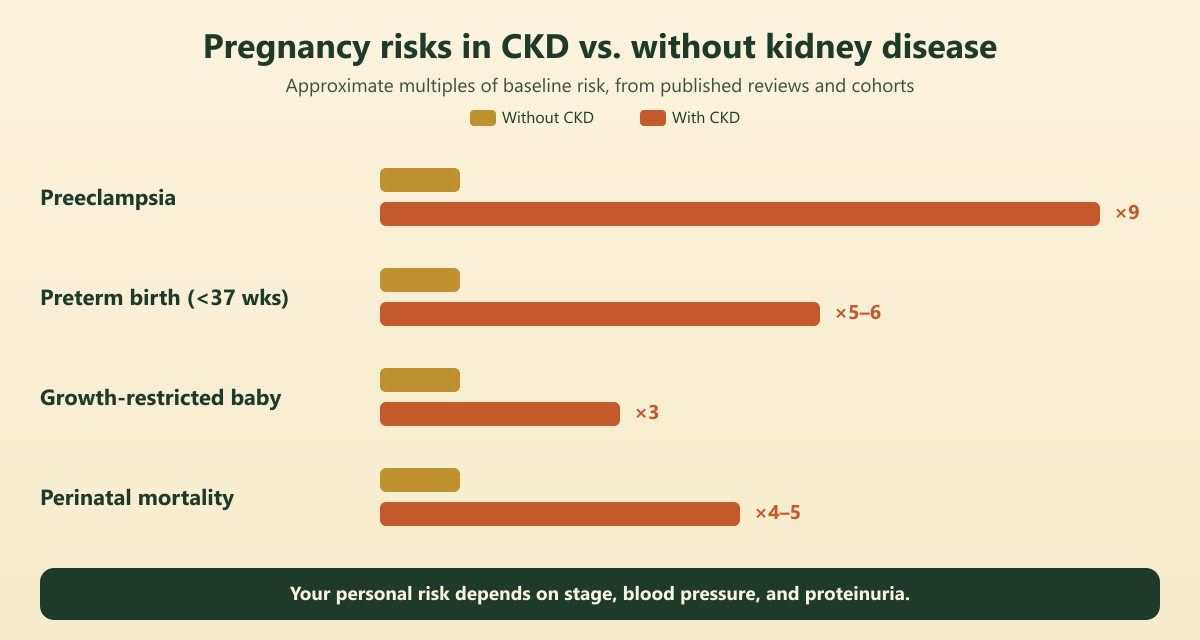
You deserve real numbers rather than vague warnings. A 2024 systematic review and meta-analysis in BJOG compared pregnancies in women with CKD to those without; relative to a pregnancy without kidney disease, CKD carried roughly:
- 9 times higher odds of preeclampsia (a serious rise in blood pressure with organ effects, usually after 20 weeks)
- About 5 to 6 times higher odds of preterm birth before 37 weeks
- About 3 times higher odds of a small or growth-restricted baby (small for gestational age, or intrauterine growth restriction)
- About 4 to 5 times higher odds of perinatal mortality, meaning stillbirth or death in the first month of life
A recent AJKD study put it similarly: about a tenfold higher chance of preeclampsia and a sixfold greater risk of preterm delivery. Absolute rates vary with how advanced the disease is. In one cohort of 101 singleton pregnancies, preeclampsia occurred in about 40% of cases, fetal growth restriction in about 27%, and perinatal mortality in about 15%; in a study focused on CKD stages 3 to 5, about half of babies were born before 37 weeks.
The risks run both directions. For you (the mother), the main concerns are worsening kidney function, new or harder-to-control high blood pressure, preeclampsia, and in advanced CKD a meaningful chance that pregnancy accelerates progression toward dialysis; studies report post-pregnancy kidney-function decline in roughly 20% to 80% of advanced-stage cases, while earlier stages carry much lower risk if blood pressure and proteinuria are well controlled beforehand. For the baby, the main concerns are preterm birth, restricted growth, low birth weight, and neonatal intensive care. Fetal death before delivery (stillbirth) is part of that elevated perinatal mortality; with modern monitoring and planned early delivery it is less common in well-followed pregnancies than older data suggested, but risk still climbs as kidney function falls.
When Proteinuria Is Present: Higher Stakes for Mother and Baby
Proteinuria (protein leaking into the urine) deserves its own spotlight because it is one of the strongest modifiable signals in this picture. Our article on the basics of proteinuria explains what the test measures; here is why it matters so much for pregnancy. Proteinuria marks more active or severe kidney injury and independently raises risk for both mother and baby.
In that 101-pregnancy cohort mentioned, two factors stood out as the biggest predictors of a composite adverse outcome (a bad combination of stillbirth, neonatal death, or early delivery for preeclampsia or fetal distress): advanced stage and heavy protein leak. Starting pregnancy with CKD stages 4 to 5 carried an odds ratio of about 43 for that composite outcome, while starting with proteinuria above 3 grams per day (roughly nephrotic-range) carried an odds ratio of about 6. In other words, the amount of protein in your urine before conception is a number your care team can actually act on.
Pregnancy itself tends to worsen the leak; one study of stages 3 to 5 found proteinuria rose by a median of about 23% during pregnancy. That matters for two reasons: more protein means higher odds of preeclampsia and preterm birth for you and growth restriction for your baby, and it is one driver of post-pregnancy kidney decline. This is why preconception counseling pushes so hard on getting blood pressure into range (often with a pregnancy-safe medicine) and reducing proteinuria before you try to conceive: those are the levers most likely to improve both maternal and fetal outcomes.
Monitoring During Pregnancy: The Close Watch That Protects You Both
If you do become pregnant, expect more surveillance than a routine obstetric visit. A KDIGO conference report recommends managing pregnancy in CKD through a multidisciplinary team skilled in both your underlying kidney disease and high-risk obstetrics, with monitoring intensity scaled to your stage, blood pressure, and proteinuria.
In practice this usually means:
- Frequent visits: at least monthly even in earlier stages, more often as severity rises or if complications appear
- Blood pressure targets: generally kept below 140/90 mm Hg, and below 130/80 when safely possible, using pregnancy-safe medicines
- Fetal growth checks: regular ultrasounds to watch for intrauterine growth restriction, since a small-for-size baby is one of the more common complications
- Low-dose aspirin: often started early in pregnancy to lower preeclampsia risk, especially if you have had it before or have other risk factors
- Lab monitoring: tracking kidney function, proteinuria, blood counts, and electrolytes over time; our guide to reading your labs helps you follow along
- A delivery plan: timing of birth is individualized; the goal is balancing the risks of continuing a complicated pregnancy against the risks of prematurity
If you are on dialysis, or your function declines enough to require it during pregnancy, your team will adjust the schedule (often more frequent or longer sessions) and make sure your vascular access is in place. The consistent theme across every stage: the better prepared and more closely watched a pregnancy is, the better the odds for both of you.
Contraception That Works With Reduced Kidney Function
If you are not ready to conceive (or your care team advises against it for now), effective contraception is part of kidney care too, and one of its most underused tools. Contraceptive use among women with advanced CKD or on dialysis runs only about 5% to 10%, versus roughly 60% in the general population; that gap matters because an unplanned pregnancy in advanced CKD carries the highest risks we have discussed.
The good news is that several highly effective methods are well suited to kidney disease. In 2024, the CDC’s U.S. Medical Eligibility Criteria for Contraceptive Use added specific guidance for CKD (covering nephrotic syndrome and dialysis). The pattern is consistent:
- Generally preferred: the copper intrauterine device (IUD), the levonorgestrel IUD, the etonogestrel implant, and progestin-only pills. These are rated as low-restriction options (Category 1 or 2) because they do not carry the estrogen-related clotting concerns.
- Use with caution: the depot medroxyprogesterone acetate injection is a Category 3, meaning its risks usually outweigh its advantages in severe CKD, mainly because of a possible added blood-clot risk and effects on bone density.
- Best avoided in severe CKD: combined hormonal contraceptives (the pill, patch, or ring that contain estrogen) are a Category 4, an unacceptable health risk, for women with nephrotic syndrome or on dialysis, because people with advanced kidney disease already have a higher tendency to form clots and estrogen can raise that further. A specific progestin-only pill containing drospirenone is also flagged as unsafe if you have known high potassium (hyperkalemia).
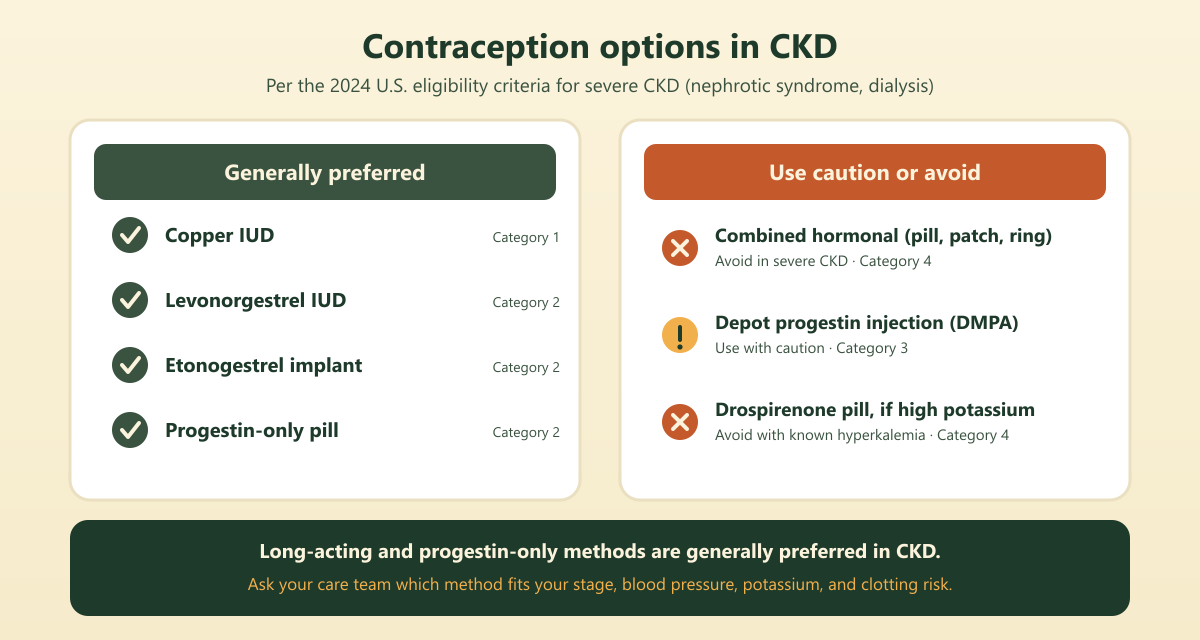
The practical takeaway: long-acting reversible options (the IUDs and implant) tend to be the sweet spot, very effective, no daily pill to remember, and free of estrogen-related risks. But “best” is personal; your choice should weigh your stage, blood pressure, potassium level, clotting risk, how you feel about each method, and when or whether you want to try for a baby. That is a conversation for your clinician, ideally with input from both nephrology and an obstetric or family-planning provider.
Menopause in CKD: Earlier, Different, and Worth Discussing
Menopause arrives differently with kidney disease. Women with CKD tend to reach it earlier than the general population; on dialysis the average is four to five years sooner, and early menopause (before age 45) has been reported across CKD stages 3 through 5. Because estrogen protects blood vessels and bones, an earlier menopause can mean a longer stretch of higher cardiovascular risk and faster bone loss, both already concerns in kidney disease.
There is also a diagnostic twist. The usual way to define menopause (12 months without a period) does not work cleanly in advanced CKD, because periods can stop from the kidney disease itself (CKD-related amenorrhea driven by high prolactin, parathyroid hormone, and uremic toxins) rather than true ovarian aging, and they can even return after a transplant or with hormone therapy. So if your periods have stopped and you are not sure whether that is menopause or your kidneys, it is worth raising directly; sometimes a blood test for follicle-stimulating hormone helps tell the difference.
On treatment: menopausal hormone therapy can be offered to women with CKD after weighing risks and benefits, and relieving hot flashes and other vasomotor symptoms remains its main indication. There are no dosing studies done specifically in kidney disease or transplant populations, so doses of hormonal (and some non-hormonal) options may need adjusting based on your creatinine clearance, and the optimal dose is still being worked out. A 2025 European menopause society clinical guide supports offering hormone therapy to women with CKD when appropriate, alongside lifestyle measures and control of cardiovascular risk factors. If you are postmenopausal or approaching it, ask your care team about bone health screening and how your specific kidney situation changes the calculus.
What to Take Away
- Pregnancy is possible at every stage of CKD, including on dialysis and after transplant; fertility is generally preserved in early stages and declines as function falls
- Get preconception counseling before you try: it should be offered from your first nephrology visit and tailored to your stage, blood pressure, and proteinuria
- Do a medication review with your nephrologist before conception. ACE inhibitors, ARBs, mycophenolate mofetil, cyclophosphamide, methotrexate, SGLT2 inhibitors, finerenone, statins, and warfarin all need to be reviewed or switched because of fetal risk
- The risks are real but quantifiable: roughly 9 times the odds of preeclampsia, 5 to 6 times preterm birth, about 3 times a growth-restricted baby, and 4 to 5 times perinatal mortality versus a pregnancy without CKD
- Proteinuria before conception is one of the strongest modifiable risk factors for both mother and baby; getting it under control beforehand improves odds
- Expect close monitoring: frequent visits, tight blood pressure targets, fetal growth ultrasounds, often low-dose aspirin, and an individualized delivery plan
- For contraception, IUDs (copper or levonorgestrel), the implant, and progestin-only pills are generally preferred; combined estrogen-containing methods are best avoided in severe CKD
- Menopause tends to come earlier with CKD and can be hard to distinguish from kidney-related amenorrhea; hormone therapy can be considered after a risk-benefit discussion
Questions Worth Asking Your Care Team
- Given my current stage, blood pressure, and proteinuria, what are my realistic chances of a healthy pregnancy?
- Which of my medications need to be stopped or switched before I try to conceive, and how far in advance?
- Would it help to see a maternal-fetal medicine specialist or a high-risk obstetrician alongside my nephrologist?
- How much protein is in my urine, and what can we do to reduce it before conception?
- What blood pressure target should I aim for before and during pregnancy?
- If I am not ready to conceive, which contraception method fits my stage, potassium level, and clotting risk best?
- How often would I be monitored during a pregnancy, and what tests would track my baby’s growth?
- Could pregnancy change the course of my kidney disease, and how would we plan for the possibility of needing dialysis?
A Note on This Article
This article is educational information only, not medical advice, diagnosis, or treatment, and it does not replace the judgment of your own care team. Fertility, pregnancy risk, medication choices, contraception, and menopause management are deeply personal: they depend on your kidney function, stage, blood pressure, proteinuria, other conditions, and full medication list. Your nephrologist, obstetrician, or renal dietitian may customize any recommendation here to match your situation. If you are pregnant or planning a pregnancy, please involve your care team early so that medication changes and monitoring can be arranged safely.
Works Cited
- Alleyne SA, Brewster UC, Shah S. Reproductive Health in CKD and Kidney Failure: Core Curriculum 2026. Am J Kidney Dis. 2026;88(3):454–468.
- Semaska N, Nolan R, Shah S. Contraceptive Use and Reproductive Health in Women With CKD: A Qualitative Study of Nephrologists in the United States. Am J Kidney Dis. 2026;87(1):7–17.e1.
- Piccoli GB, et al. Women and kidney health: conclusions from a KDIGO Controversies Conference. Kidney Int. 2025 (in press).
- Jeyaraman D, et al. Adverse pregnancy outcomes in pregnant women with chronic kidney disease: A systematic review and meta-analysis. BJOG. 2024;131(10):1331–1340.
- Evaluation of obstetric outcomes and prognostic factors in pregnancies with chronic kidney disease. Hypertens Pregnancy. 2021;40(1):75–80.
- Wiles K, Webster P, Seed PT. The impact of chronic kidney disease Stages 3 to 5 on pregnancy outcomes. Nephrol Dial Transplant. 2021;36(11):2008–2017.
- Da Silva I, Orozco-Guillén A, Longhitano E, et al. Pre-gestational counselling for women living with CKD: starting from the bright side. Clin Kidney J. 2024;17(5):sfae084.
- Wiles K, Chappell L, Clark K, et al. Clinical practice guideline on pregnancy and renal disease. BMC Nephrol. 2019;20:401.
- Pregnancy and Glomerular Disease: A Systematic Review of the Literature. Clin J Am Soc Nephrol. 2017;12(11).
- Centers for Disease Control and Prevention. U.S. Medical Eligibility Criteria for Contraceptive Use, 2024. MMWR Recomm Rep. 2024;73(4):1–69.
- Rytz CL, Kochaksaraei GS, Skeith L, et al. Menstrual Abnormalities and Reproductive Lifespan in Females with CKD: A Systematic Review and Meta-Analysis. Clin J Am Soc Nephrol. 2022;17(12):1742–1753.
- Reproductive Health in Women with Kidney Disease (editorial). Clin J Am Soc Nephrol. 2022;17(12):1716–1718.
- Vellanki K, Hou S. Menopause in CKD. Am J Kidney Dis. 2018;71(5):710–719.
- Chronic kidney disease and menopausal health: An EMAS clinical guide. Maturitas. 2025;192 Suppl C.