SGLT2 Inhibitors and CKD: Can a Diabetes Drug Protect Your Kidneys?
If you have chronic kidney disease (CKD) and your nephrologist recently mentioned an “SGLT2 inhibitor,” you may be wondering how a diabetes drug ended up on your kidney care list. You are not alone in that confusion: for years these medications were known mainly for lowering blood sugar, and most people with CKD do not have diabetes at all.
Here is the short version: three large randomized trials showed that SGLT2 inhibitors slow the progression of kidney disease and reduce heart-related events even in people without diabetes. The major international guideline now recommends them as core therapy for many adults with CKD, and two of the drugs carry FDA-approved kidney indications. This article explains how they work, who is a candidate, what to expect when you start (including the early dip in your eGFR number that surprises so many patients), and the safety basics worth discussing with your care team. For background on what your numbers mean, see our guides to what GFR is in CKD and CKD stages 1 through 5.
What Are SGLT2 Inhibitors, and How Do They Work?
SGLT2 stands for sodium-glucose cotransporter 2, a protein that lines the first part of your kidney’s filtering tubes. Its normal job is to grab glucose (sugar) out of the fluid your kidneys have filtered and hand it back to your blood. In most people, about nine-tenths of the sugar your kidneys filter gets reclaimed this way, which is why healthy urine contains almost none.
SGLT2 inhibitors block that protein. The glucose that would normally be reclaimed instead stays in the fluid and leaves in your urine, carrying a small amount of salt and water with it. That produces three modest effects: lower blood sugar (the original reason these drugs were made), a mild diuretic effect, and a small drop in blood pressure and body weight. The first drug in this class reached the market around 2014 for type 2 diabetes, and several are now available under generic names such as dapagliflozin, empagliflozin, and canagliflozin.
The kidney-protective twist is what changed everything. When glucose spills into the filtering tubes, it triggers a built-in feedback response called tubuloglomerular feedback: the kidney senses the extra solute downstream and eases the pressure inside each filter (the glomerulus). In CKD, those filters often work under abnormally high pressure, which accelerates scarring. By unloading that pressure, SGLT2 inhibitors reduce what clinicians call glomerular hyperfiltration, and they also lower the amount of albumin leaking into urine: in one large trial, the urinary albumin-to-creatinine ratio (UACR, your protein-in-urine number) fell by about 19% on average. The KDIGO 2024 guideline describes this as a favorable hemodynamic change rather than damage to the kidney itself.
The Big Shift: Kidney Protection Beyond Diabetes
For decades, the mainstays of slowing CKD were blood pressure control (usually with an ACE inhibitor or ARB), lifestyle measures, and managing the underlying cause. SGLT2 inhibitors became the first new class in a generation to add proven protection on top of that foundation, and the evidence came from three landmark randomized trials:
- CREDENCE (2019) tested canagliflozin in people with type 2 diabetes and high levels of protein in urine. Over about two and a half years, it cut the risk of kidney failure or major kidney decline by about 30%, and the trial was stopped early because the benefit was so clear.
- DAPA-CKD (2020) tested dapagliflozin in people with CKD and elevated urine albumin, with or without diabetes: about one-third of participants did not have diabetes at all. The risk of major kidney decline, kidney failure, or death from kidney or heart causes fell by about 39%, and overall deaths were also lower (about a third fewer).
- EMPA-KIDNEY (2023) was the broadest test: empagliflozin in more than 6,600 people with CKD at risk of progression, including patients without diabetes (54% of participants), kidney function as low as an eGFR near 20, and only modest proteinuria. The combined risk of kidney disease progression or cardiovascular death fell by about 28%, which the trial authors put in plain terms: 42 fewer major events per 1,000 patients treated over two years. A long-term follow-up published in 2025 found that benefit persisted across years of observation.
Three different drugs, three different populations, one consistent direction. That pattern is why clinicians treat the effect as a class effect (shared by the whole drug family) rather than a quirk of one molecule. The heart benefits matter too: fewer hospitalizations for heart failure and fewer cardiovascular deaths across these trials, which matters because most people with CKD die of heart disease rather than kidney failure. For the bigger picture of how therapies stack up in slowing progression, see our article on delaying progression of CKD.
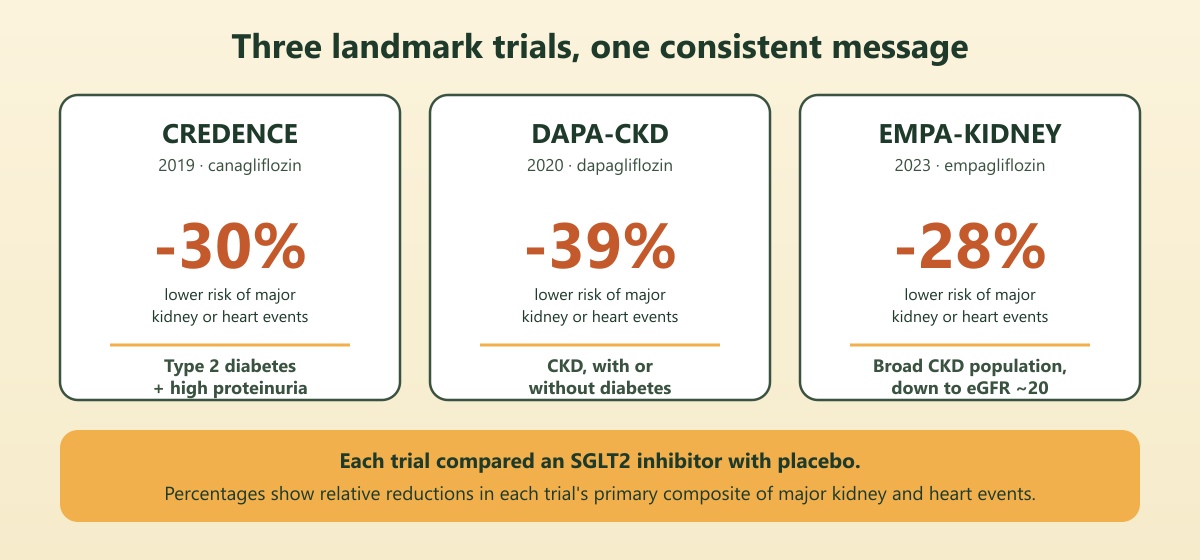
Caption: Three landmark trials, one consistent message: SGLT2 inhibitors lowered the risk of major kidney and heart events by roughly a quarter to two-fifths.
Who Is a Candidate? What the Guidelines Say
The KDIGO 2024 guideline (the international standard for CKD care) now recommends SGLT2 inhibitors in three tiers:
- Type 2 diabetes plus CKD with an eGFR of 20 or higher: recommended, based on strong evidence.
- CKD with an eGFR of 20 or higher and a urine albumin-to-creatinine ratio (UACR) of 200 mg/g or higher, or heart failure at any level of proteinuria: recommended.
- An eGFR between 20 and 45 with a UACR below 200 mg/g: suggested, a softer recommendation because the evidence in this lower-risk group is less certain.
Two FDA-approved indications match this picture: dapagliflozin was approved for CKD “at risk of progression” in April 2021, and empagliflozin followed in September 2023. Both labels describe reducing the risk of sustained eGFR decline, end-stage kidney disease, cardiovascular death, and hospitalization for heart failure in adults with CKD at risk of progression.
A few practical boundaries worth knowing:
- Starting threshold. The trials enrolled patients down to an eGFR of about 20 to 25; starting below that has not been well studied, so it becomes a case-by-case conversation.
- Continuing after the number drops. Once started, KDIGO says it is reasonable to continue even if your eGFR falls below 20, unless you cannot tolerate the medication or dialysis or transplant begins.
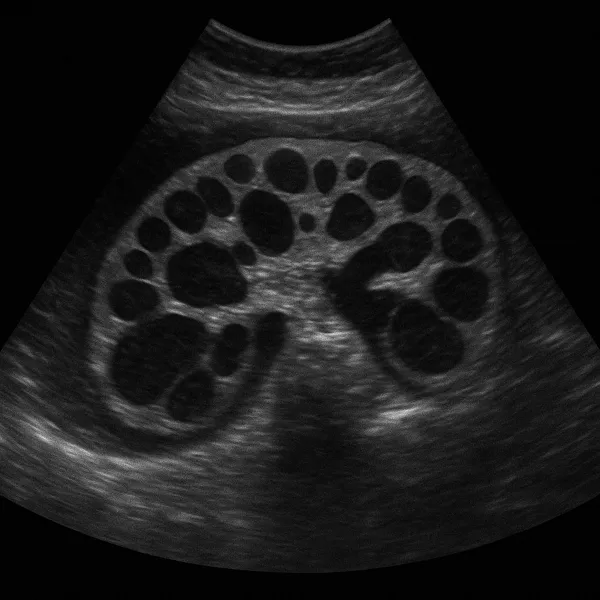
- Not for every cause of CKD. The empagliflozin label notes that it is not recommended for CKD caused by polycystic kidney disease, where the problem is growing cysts rather than filter pressure.
- Transplant and dialysis patients should have a specific conversation with their team about timing and interactions with other medications.
If you live with diabetes-related kidney disease, this medication class sits at the center of modern treatment; our article on diabetic kidney disease covers how it fits in there. And if your protein-in-urine number is what prompted this conversation, our guide to proteinuria basics explains what that test measures and why it matters.
What to Expect When You Start: The eGFR Dip
Here is the part that surprises (and sometimes alarms) patients most. In the first one or two weeks after starting an SGLT2 inhibitor, your eGFR often drops a few points. In DAPA-CKD, the average dip was about 4 mL/min/1.73 m² in the first two weeks. Then it stabilizes: from week two onward, kidney function declined about 2 mL/min per year slower than in the placebo group, and EMPA-KIDNEY showed the same pattern (a difference of about 1.4 mL/min per year after the initial dip).
This early drop is expected, and it is not a sign that the drug is harming your kidneys. It reflects the favorable pressure change described above: the filters are working at lower pressure, and eGFR estimates respond to that immediately. The KDIGO 2024 guideline states this plainly: the reversible decrease in eGFR on initiation is generally not an indication to discontinue therapy, and starting or continuing an SGLT2 inhibitor does not change how often your labs should be checked.
Practical guidance: expect a small early dip, do not panic over it, but do tell your care team if you feel unwell (dizziness, unusual fatigue, dehydration) in the first weeks. If you are unsure what a new number means, our guide to reading your labs walks through eGFR and its neighbors.
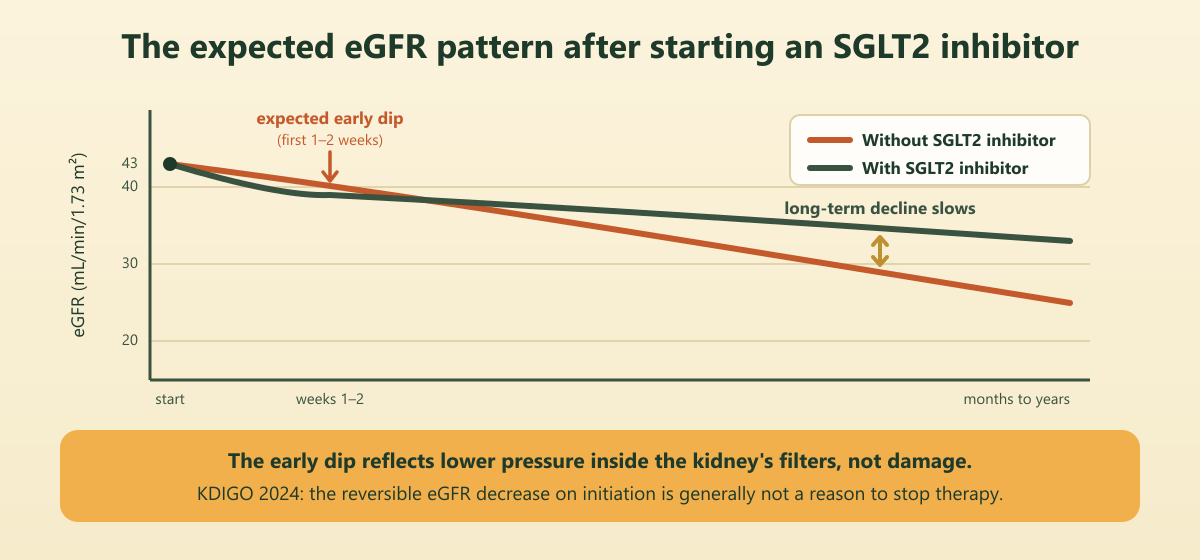
Caption: The expected pattern after starting an SGLT2 inhibitor: a small early dip in eGFR over the first two weeks, then a slower long-term decline than without treatment.
Safety: What Can Go Wrong, and How Often?
Like any medication, SGLT2 inhibitors have side effects, but in the large trials the safety profile was reassuring. Here is what the data show:
- Genital yeast infections are the most common complaint, in men and women alike, because sugar in the urine creates a friendly environment for yeast. Most cases are mild and respond to standard treatment; good hygiene helps, and you should tell your care team about recurring episodes so options can be adjusted.
- Volume depletion and low blood pressure. These drugs act as mild diuretics, so they can tip you toward dehydration or lightheadedness when standing, especially if you also take a diuretic (water pill) or have advanced CKD. In DAPA-CKD, volume-depletion events were somewhat more common with dapagliflozin than placebo (about 6% vs 4%). Our article on diuretics in CKD explains how water pills fit into kidney care.
- Diabetic ketoacidosis is rare but serious. Ketoacidosis is a buildup of acidic ketones in the blood, and with SGLT2 inhibitors it can occur even when blood sugar is only mildly elevated (sometimes called “euglycemic” DKA). In EMPA-KIDNEY it happened in 6 of more than 3,300 patients on empagliflozin (and once in the placebo group); in DAPA-CKD there were zero cases with dapagliflozin. The risk rises during illness, surgery, fasting, or very low-carbohydrate eating. KDIGO says it is reasonable to pause the medication during prolonged fasting, surgery, or critical medical illness and restart when you are stable: this is often called “sick day” management.
- Amputations deserve a nuanced footnote. In the CANVAS program (an earlier cardiovascular trial of canagliflozin in people with diabetes), lower-limb amputations occurred at about twice the rate as placebo (6.3 vs 3.4 per 1,000 patient-years), mostly at the toe or metatarsal level. That signal did not appear in CREDENCE, and neither dapagliflozin nor empagliflozin trial showed a significant increase; KDIGO’s summary of the CKD trials found no excess risk of amputation.
- What they do not raise. Unlike ACE inhibitors and ARBs, SGLT2 inhibitors did not cause high potassium in these trials, and because they work without insulin, they do not add low-blood-sugar risk on their own.
IMPORTANT: Never start, stop, or adjust an SGLT2 inhibitor on your own. Whether one makes sense depends on your eGFR, proteinuria level, blood pressure, other conditions, and full medication list, and the right response to a side effect is usually a plan with your care team (treating an infection, adjusting timing, a sick-day pause), not silence or self-adjustment.
Cost and Access: The Practical Side
Let’s be practical: these are prescription medications, and out-of-pocket cost varies widely by insurance plan. Coverage for the kidney indication is now common but not universal, and formulary status changes over time. Ask your pharmacist or care team about what your plan covers and whether manufacturer assistance programs apply to you; each drug has its own program. Whatever the answer, do not ration doses on your own: taking a medication every other day instead of daily was never part of the evidence behind these results.
What to Take Away
- SGLT2 inhibitors block sugar reabsorption in the kidney’s filtering tubes; the resulting glucose spill lowers filter pressure and slows scarring, which is why they protect kidneys even without diabetes
- Three landmark trials (CREDENCE, DAPA-CKD, EMPA-KIDNEY) cut major kidney or heart events by roughly 28% to 39%, with benefits consistent in people with and without diabetes; a 2025 long-term follow-up found the benefit persisted
- KDIGO 2024 recommends them for most adults with CKD at risk of progression, generally down to an eGFR of about 20; dapagliflozin (approved 2021) and empagliflozin (approved 2023) carry FDA-approved kidney indications
- Expect a small, reversible dip in eGFR within the first two weeks: it is expected physiology, not damage, and is generally not a reason to stop
- The most common side effects are genital yeast infections and mild dehydration; rare ketoacidosis risk rises with illness or fasting, so follow sick-day guidance from your care team
- Cost varies by plan; ask about coverage and assistance programs rather than rationing doses
Questions Worth Asking Your Care Team
- Given my eGFR, proteinuria level, and other conditions, am I a good candidate for an SGLT2 inhibitor?
- Which medication in this class makes the most sense for me, and why?
- What should my blood pressure and kidney function look like in the first few weeks after starting?
- How will you monitor me (which labs, how often), and what result would make you adjust or stop the medication?
- I take a diuretic [or other medications]: could that raise my risk of dehydration or low blood pressure on this drug?
- What “sick day” rules should I follow if I get sick, have surgery, or cannot eat normally for a stretch?
- Which symptoms (genital infections, dizziness, unusual fatigue or nausea) should prompt me to call you sooner rather than waiting for my next visit?
- How does cost and insurance coverage work for this medication in my plan, and are there assistance options I qualify for?
A Note on This Article
This article is educational information only, not medical advice, diagnosis, or treatment, and it does not replace the judgment of your own care team. Whether an SGLT2 inhibitor makes sense depends on your kidney function, proteinuria level, blood pressure, other conditions, and full medication list. Your nephrologist may customize any recommendation here to match your stage and labs.
Works Cited
- Kidney Disease: Improving Global Outcomes (KDIGO) CKD Work Group. KDIGO 2024 Clinical Practice Guideline for the Evaluation and Management of Chronic Kidney Disease. Kidney Int. 2024;105(4S):S117–S314.
- Heerspink HJL, Stefánsson BV, Correa-Rotter R, et al. Dapagliflozin in Patients with Chronic Kidney Disease (DAPA-CKD). N Engl J Med. 2020;383(15):1436–1446.
- EMPA-KIDNEY Collaborative Group, Herrington WG, Staplin N, Wanner C, et al. Empagliflozin in Patients with Chronic Kidney Disease (EMPA-KIDNEY). N Engl J Med. 2023;388(2):117–127.
- Perkovic V, Jardine MJ, Neal B, et al. Canagliflozin and Renal Outcomes in Type 2 Diabetes and Nephropathy (CREDENCE). N Engl J Med. 2019;380(24):2295–2306.
- Neal B, Perkovic V, Matthews D, et al. Canagliflozin and Cardiovascular and Renal Events in Type 2 Diabetes (CANVAS Program). N Engl J Med. 2017;377(7):644–657.
- EMPA-KIDNEY Collaborative Group. Long-Term Effects of Empagliflozin in Patients with Chronic Kidney Disease. N Engl J Med. 2025;392(8):777–787.
- U.S. Food and Drug Administration. Approval letter for dapagliflozin (NDA 202293S-024), chronic kidney disease indication, April 30, 2021.
- U.S. Food and Drug Administration. Empagliflozin prescribing information; chronic kidney disease indication added September 2023 (NDA 204629S-040).